strength training for women: the complete beginner's guide to building confidence in the gym
If you've ever walked into a gym, glanced at the free weight area, and turned around — you're not alone. As a personal trainer in Charleston, SC, I've coached hundreds of women through that exact moment. The fear of looking lost, lifting "wrong," or somehow getting bulky overnight keeps too many women stuck on the elliptical or avoiding the gym entirely. Here's the truth: strength training for women is the single most powerful thing you can do for your body, your confidence, and your long-term health. And it's far less intimidating than you think.
This guide is everything I wish I could hand to every woman who walks into Belk Body Lab for the first time. Whether you're training in Charleston, Mount Pleasant, Summerville, or following an online program from anywhere in the country, these principles will take you from "I don't know what I'm doing" to "I own this weight room."
Why Strength Training Is Non-Negotiable for Women
The benefits of strength training for women go far beyond aesthetics — though the aesthetic results are remarkable. Here's what the research consistently shows:
- Bone density protection: Women lose bone density at an accelerated rate after 30, and dramatically after menopause. Resistance training is the most effective non-pharmaceutical intervention for preventing osteoporosis.
- Metabolic advantage: Every pound of lean muscle burns approximately 6-10 calories per day at rest. Over time, adding 8-10 lbs of muscle means your body is burning 50-100 extra calories daily without additional effort.
- Hormonal regulation: Strength training improves insulin sensitivity, supports healthy cortisol response, and positively impacts estrogen and progesterone balance.
- Mental health: Resistance training has been shown to reduce anxiety and depression symptoms by 20-30% in clinical studies — comparable to some medications.
- Functional independence: Carrying groceries, picking up kids, moving furniture — strength training makes daily life easier for decades to come.
- Injury prevention: Stronger muscles, tendons, and ligaments mean fewer injuries during both exercise and daily activities. I cover this in depth in my guide on recovery and injury prevention.
"The women who transform the most in my coaching program aren't the ones who start with the most athletic background. They're the ones who decide the weight room belongs to them too." — Kyle Belk, NASM-CPT
Myth-Busting: 5 Lies That Keep Women Out of the Weight Room
Myth #1: "Will lifting weights make women bulky?"
This is the single most common fear I hear from new female clients. The answer is an emphatic no. Women produce roughly 1/15th to 1/20th the testosterone of men. Testosterone is the primary hormonal driver of significant muscle hypertrophy. The women you see in bodybuilding competitions who look extremely muscular have typically trained intensely for 5-10+ years, follow extremely specific nutrition protocols, and in many cases use pharmaceutical assistance. A women's strength training program built around 3-4 days per week of progressive resistance training will build a lean, defined, athletic physique — not a bulky one.
Myth #2: "Women should only use light weights and high reps"
This outdated advice keeps women spinning their wheels. If you can do 30 reps without difficulty, you are not building muscle — you are doing glorified cardio with a dumbbell in your hand. Women respond to progressive overload the same way men do. Challenging weight in the 6-12 rep range is where real body composition change happens.
Myth #3: "Cardio is better for women than weight training"
Excessive cardio without resistance training leads to a "skinny fat" physique — lower scale weight but high body fat percentage with minimal muscle definition. The most effective fat loss approach pairs strength training with moderate cardio, not the other way around.
Myth #4: "You need to lose weight before you start lifting"
I hear this constantly. "I want to lose 20 lbs first, then I'll start lifting." This is backwards. Strength training accelerates fat loss by increasing your metabolic rate, improving insulin sensitivity, and creating the muscle definition that actually makes you look "toned." Start lifting now — your body recomposition will thank you.
Myth #5: "Women over 40 shouldn't lift heavy"
Women over 40 should absolutely lift heavy — with proper form and appropriate progression. This is precisely the population that benefits most from resistance training due to accelerating bone density loss and hormonal shifts. Age-appropriate programming with a qualified personal trainer for women makes heavy lifting safe and transformative at any age.
How to Start Lifting Weights as a Woman: Step by Step
Step 1: Choose the Right Program Structure
For a women's workout plan built around strength training, I recommend starting with 3-4 training days per week. This gives your body enough stimulus to grow while allowing adequate recovery. How many times a week should a woman strength train? For beginners, 3 days is the sweet spot for the first 4-8 weeks, then progressing to 4 days as your work capacity improves.
Step 2: Master the Foundational Movement Patterns
Every effective gym workout plan for women is built on six fundamental movement patterns:
- Squat (goblet squat, barbell squat)
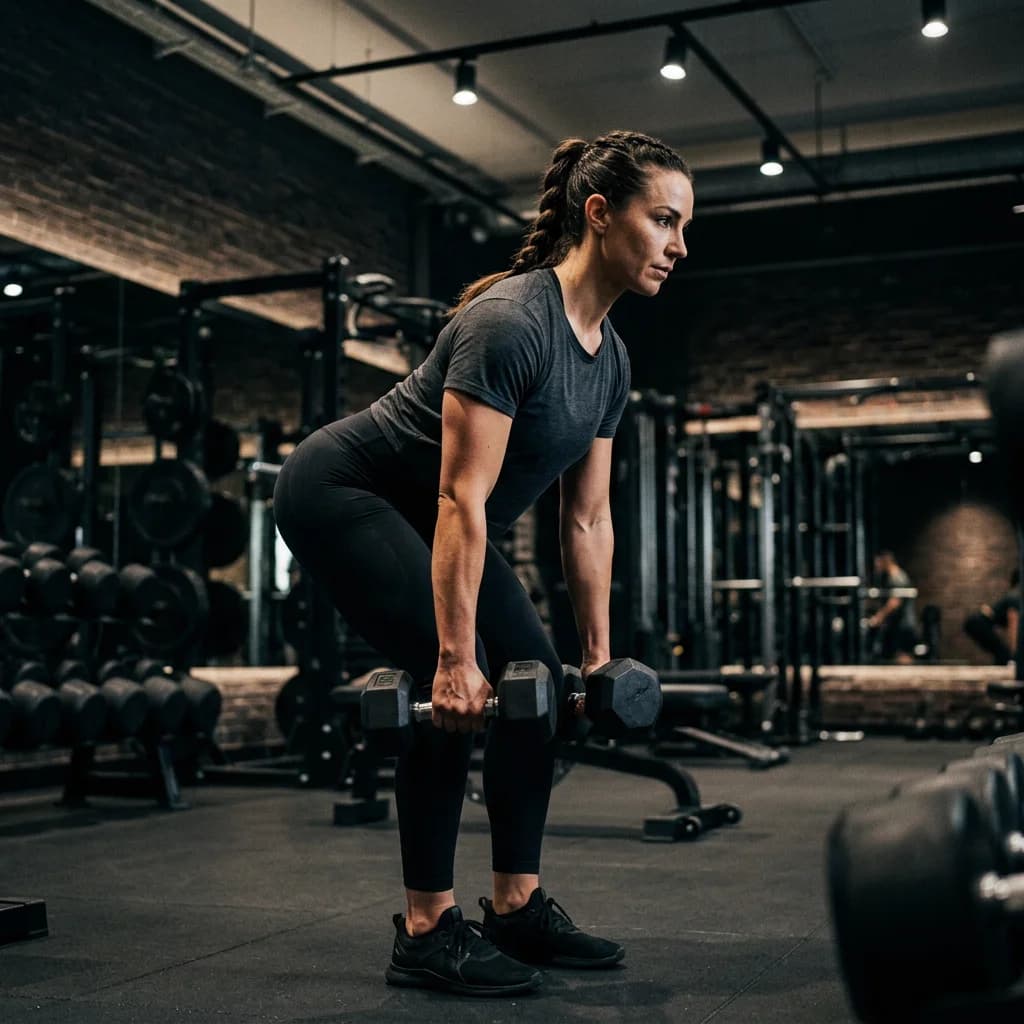
- Hinge (Romanian deadlift, conventional deadlift)
- Push (dumbbell bench press, overhead press)
- Pull (lat pulldown, dumbbell row, cable row)
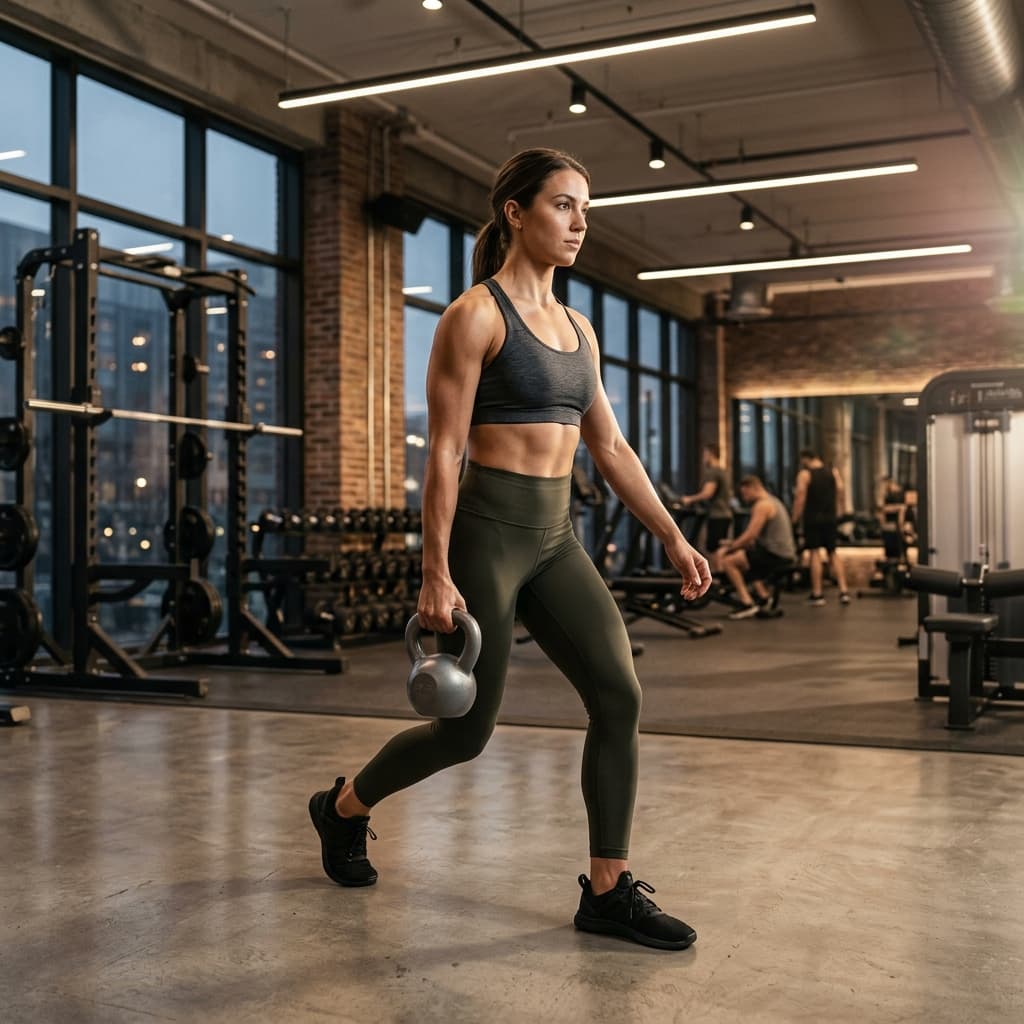
- Lunge (walking lunges, Bulgarian split squats)
- Carry/Core (farmer's walks, planks, Pallof press)
If you can perform these six patterns with proper form, you have the foundation for any women's strength training program. For a deeper dive into building your training base, check out the beginner muscle building plan.

Step 3: Understand Progressive Overload
Progressive overload is the principle that drives all physical adaptation. It means gradually increasing the demand on your muscles over time — by adding weight, adding reps, adding sets, or improving form. Without progressive overload, your body has no reason to change. I tell every client: if your workout feels the same as it did 4 weeks ago, you're maintaining — not improving.
Step 4: Get Your Nutrition Right
Weight training for women beginners requires adequate protein — I recommend 0.8 to 1.0 grams of protein per pound of body weight to support muscle recovery and growth. This is the area where most women under-eat. You can't build a stronger body on salads and 1,200-calorie diets. Read my full breakdown on mastering nutrition and macros for the complete framework.
The Best Exercises for Women: A 4-Day Beginner Workout Plan
Here's the exact type of women's workout plan I build for beginners at Belk Body Lab. This is a 4-day upper/lower split designed for strength training for women beginners. Start with weights you can control for all prescribed reps with good form.

| Day | Exercise | Sets x Reps | Rest |
|---|---|---|---|
| Day 1 — Lower Body | Goblet Squat | 3 x 10 | 90s |
| Romanian Deadlift (Dumbbell) | 3 x 10 | 90s | |
| Walking Lunges | 3 x 12 each leg | 60s | |
| Leg Press | 3 x 12 | 90s | |
| Plank Hold | 3 x 30-45s | 45s | |
| Day 2 — Upper Body | Dumbbell Bench Press | 3 x 10 | 90s |
| Seated Cable Row | 3 x 10 | 90s | |
| Dumbbell Overhead Press | 3 x 10 | 60s | |
| Lat Pulldown | 3 x 12 | 60s | |
| Dumbbell Bicep Curl / Tricep Pushdown | 2 x 12 each | 45s | |
| Day 3 — Lower Body | Barbell Hip Thrust | 3 x 10 | 90s |
| Bulgarian Split Squat | 3 x 10 each leg | 90s | |
| Leg Curl (Machine) | 3 x 12 | 60s | |
| Calf Raises | 3 x 15 | 45s | |
| Dead Bug | 3 x 10 each side | 45s | |
| Day 4 — Upper Body | Push-Ups (or Incline Push-Ups) | 3 x 8-12 | 60s |
| Single-Arm Dumbbell Row | 3 x 10 each arm | 60s | |
| Cable Face Pull | 3 x 15 | 45s | |
| Dumbbell Lateral Raise | 3 x 12 | 45s | |
| Pallof Press | 3 x 10 each side | 45s |
Programming notes: Rest 1-2 days between sessions (e.g., Mon/Tue/Thu/Fri or Mon/Wed/Thu/Sat). Increase weight by the smallest increment available when you can complete all prescribed reps with good form for two consecutive sessions. This is how progressive overload works in practice — small, consistent jumps that compound over months into dramatic strength gains.

What to Expect in Your First 90 Days
I've watched this timeline play out with hundreds of female clients. Here's what realistic progress looks like with a structured women's strength training program:
- Weeks 1-3 (Neural Adaptation): You'll feel clumsy and uncoordinated. This is completely normal. Your nervous system is learning to recruit muscle fibers it hasn't used before. Soreness will be highest during this phase.
- Weeks 4-8 (Strength Gains): Movements start feeling natural. You'll notice your weights increasing rapidly — it's common for beginners to double their starting weights on some exercises. This is neural efficiency, not muscle growth yet.
- Weeks 8-12 (Visible Change): This is where the mirror starts telling a different story. Clothes fit differently. Arms have definition. Posture improves. Muscle is building and fat is shifting. For a complete framework on this transformation timeline, see my ultimate 90-day body transformation guide.
Common Mistakes Women Make When Starting to Lift
- Under-eating protein: Most women I coach are eating 40-60g of protein per day when they start. They need 100-140g+. This is the single biggest nutrition mistake I correct.
- Avoiding compound lifts: Spending 45 minutes on the hip abductor machine and skipping squats, deadlifts, and presses means you're training 5% of your body while ignoring the 95% that drives real results.
- Program hopping: Following a different Instagram workout every week guarantees zero progress. Pick a structured program and follow it for 8-12 weeks minimum.
- Fearing the scale going up: Muscle is denser than fat. Many of my female clients gain 3-5 lbs on the scale during their first 12 weeks while dropping 1-2 clothing sizes. The scale is a terrible metric for body composition change.
- Skipping recovery: Sleep, hydration, and rest days aren't optional. They're when your body actually builds the muscle you stimulated in the gym.
Why Working with a Personal Trainer for Women Matters
Can you learn to lift on your own? Yes. Will you learn faster, avoid injuries, and get dramatically better results with a qualified women's fitness coach? Also yes. Here's what a personal trainer for women actually provides:
- Form correction in real time: YouTube videos can't tell you that your knees are caving on squats or your lower back is rounding on deadlifts.
- Individualized programming: Your body, your injury history, your goals, your schedule — a generic PDF program accounts for none of these.
- Accountability and confidence: Having someone in your corner who believes in your strength before you do is genuinely transformative.
- Nutrition guidance: Understanding macros and nutrition is half the equation. Most women have been under-eating protein and over-restricting calories for years.
Wondering about investment? I break down exactly what to expect in my guide on personal trainer costs.

The Bottom Line: You Belong in the Weight Room
Female strength training isn't a trend — it's the most evidence-backed approach to building a strong, resilient, confident body at any age. The weight room isn't just for men, and barbells don't care about your gender. Every woman I've coached who committed to a structured strength training program for 90+ days has told me some version of the same thing: "I wish I had started sooner."
You don't need to have it all figured out before you begin. You just need to begin.
READY TO START YOUR STRENGTH TRAINING JOURNEY?
Whether you've never touched a barbell or you're ready to take your training to the next level, Belk Body Lab offers personalized coaching designed for women at every level. In-person training in Charleston, SC and online coaching available nationwide.
Book Your Free Consultation →Questions &
Answers
If your question isn't answered here, reach out directly — Kyle responds personally.
No. Women produce roughly 1/15th to 1/20th the testosterone of men, which is the primary hormonal driver of significant muscle mass. A structured strength training program 3-4 days per week will build a lean, defined, athletic physique — not a bulky one.
Beginners should start with 3 days per week, progressing to 4 days after 4-8 weeks as work capacity improves. Most women see excellent results on a 4-day upper/lower split with 1-2 rest days between sessions.
The best exercises for women beginners are compound movements: goblet squats, Romanian deadlifts, dumbbell bench press, lat pulldowns, walking lunges, and planks. These six movement patterns build the most strength and muscle in the least time.
Start with a structured 3-day program using dumbbells and machines. Focus on learning proper form with manageable weights for 2-3 weeks before worrying about progressive overload. Master the six foundational movement patterns — squat, hinge, push, pull, lunge, and carry.
Strength training for women over 40 provides critical benefits including slowing bone density loss, maintaining metabolic rate during hormonal shifts, improving joint stability, reducing injury risk, and preserving functional independence.
Yes — this is called body recomposition and it is especially effective for beginners. Women who are new to strength training and eat adequate protein in a moderate caloric deficit can simultaneously lose fat and build muscle for the first 6-12 months.
You don't strictly need one, but working with a qualified coach dramatically accelerates results, reduces injury risk, and builds confidence faster. Most women who try to learn entirely on their own plateau within 8-12 weeks.
Women engaged in regular strength training should aim for 0.8 to 1.0 grams of protein per pound of body weight daily. For a 150-lb woman, that means 120-150 grams of protein per day.
A beginner plan should include 3-4 training days per week using an upper/lower split. Each session should last 45-60 minutes, focus on compound movements with 3 sets of 8-12 reps, and include progressive overload every 1-2 weeks.
Strength gains appear in weeks 3-4 as the nervous system adapts. Visible body composition changes — muscle definition, clothes fitting differently — usually become noticeable around weeks 8-12 with consistent training and proper nutrition.