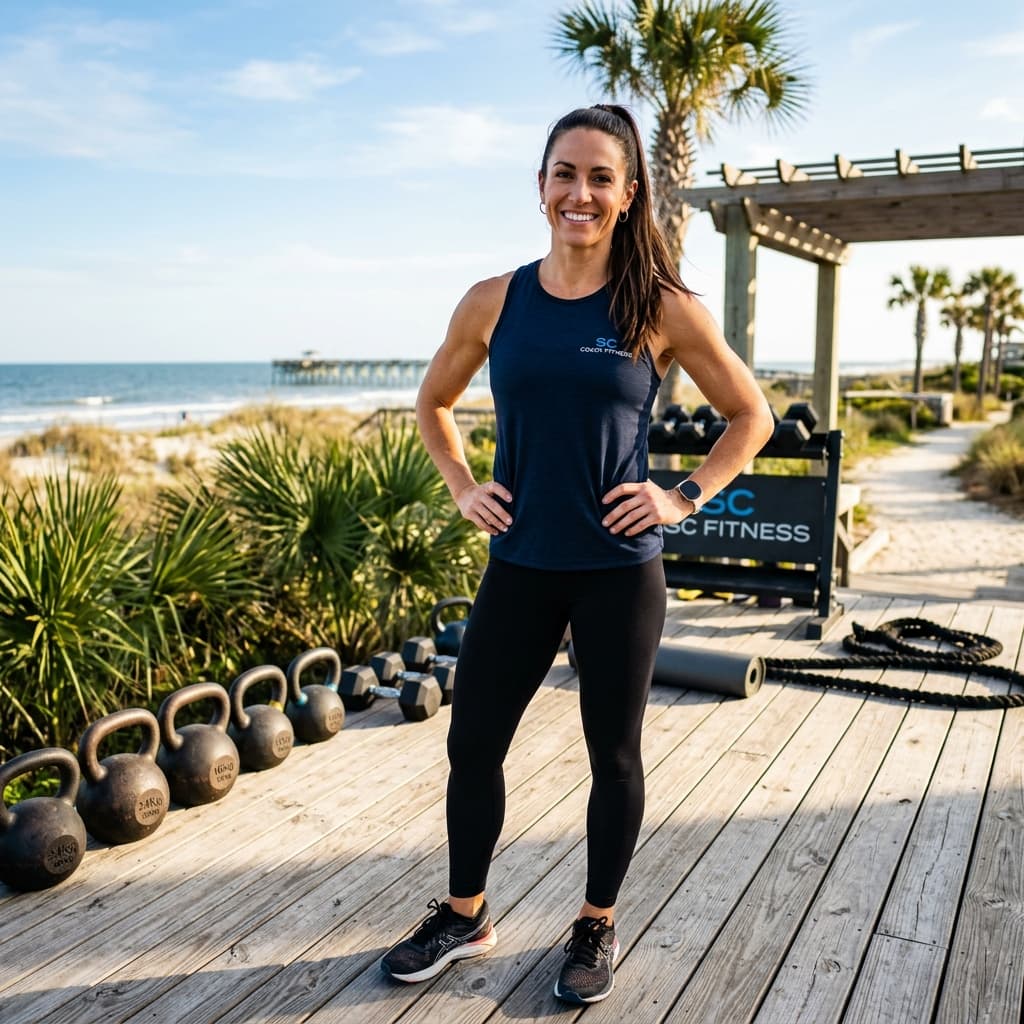
how much does a personal trainer cost? 2026 pricing guide

Short answer: In 2026, one-on-one personal training sessions typically cost $40–$150 per session nationwide, which works out to roughly $500–$1,800 per month for several sessions a week. Online coaching packages range from $75–$350 per month and often deliver more total value because they include nutrition coaching and ongoing support — not just gym time.
I'm Kyle Belk, a NASM-certified personal trainer based in Charleston, SC. "How much do you cost?" is a fair question — and most pricing pages dodge it. This guide gives you the real ranges across every format nationwide, explains what actually drives the price, flags the hidden costs to watch for, and helps you tell the difference between a cheap session and genuine value. Whether you're in South Carolina, Texas, California, or anywhere in the US, these principles apply. Read it before you sign anything.
Table of contents
- The honest pricing ranges in South Carolina (2026)
- Cost by format: per session, package, group, online
- Why the price varies so much
- The hidden variable: what's included
- Hidden costs to watch for
- Per session vs package vs online — best value?
- Are personal trainers actually worth it?
- How to budget for a trainer
- How Belk Body Lab prices coaching
- FAQs
- Related articles
Personal trainer cost in 2026: the honest ranges
Here's what the market looks like across the United States in 2026:
| Format | Typical US cost (2026) | Usually billed |
|---|---|---|
| One-on-one, per session | ~$40–$150 / session | Per session or pack of sessions |
| One-on-one, training 3–4x/week | ~$500–$1,800 / month | Monthly, session-based |
| Small-group / semi-private | ~$15–$50 / person / session | Monthly or class pack |
| Online / hybrid coaching | ~$75–$350 / month | Monthly subscription |
These are national market ranges, not a quote. Real pricing depends on your goals, format, location, and how often you train. Costs skew higher in major metros (NYC, LA, Miami) and lower in suburban and rural areas. In the Southeast — including South Carolina, where I'm based — rates tend to fall in the middle of these ranges.

Cost by format: per session, package, group, online
One-on-one per session. The most flexible and the most expensive per workout. Great for occasional form checks or people who want undivided attention every session. The downside: it's usually just the trainer's time, with little structure between sessions.
One-on-one packages. Buying a block of sessions usually lowers the per-session price and often adds programming and check-ins. Better value than pay-as-you-go, and the commitment itself improves consistency.
Small-group / semi-private. The trainer's time is split across 2–6 people, so the per-person cost drops sharply. You give up some individual attention but keep coaching, accountability, and a social push. A strong middle option on a tighter budget.
Online / hybrid coaching. Billed as a flat monthly fee, usually less than several weekly in-person sessions, and typically includes a custom training program, nutrition, and regular check-ins. For self-motivated people it's often the best results-per-dollar of any format — I make the full case for it in Online Personal Training in South Carolina: The Complete Guide, including who it works best for and why roughly 80% of my most dramatic client transformations have come from online clients.

Why the price varies so much
Two trainers can charge wildly different rates and both be "right," because price reflects:
- Certification and experience — a NASM-certified coach with a long track record prices differently than a brand-new trainer. (Credentials matter more than people think; I explain which ones actually count in How to Choose the Right Personal Trainer in South Carolina.)
- Format — one-on-one costs more than small group, which costs more than online.
- Location — peninsula and boutique-studio rates run higher than suburban or in-home.
- What's actually included — this is the big one, and it's where comparisons fall apart.
The hidden variable: what's included
This is the part that matters most. A "cheap" session and an "expensive" program are often completely different products:
| What you might be paying for | Cheap per-session | Full coaching package |
|---|---|---|
| Trainer's time in the gym | ✅ | ✅ |
| Custom training program | sometimes | ✅ |
| Nutrition plan | rarely | ✅ |
| Weekly check-ins & progress tracking | rarely | ✅ |
| Support between sessions | no | ✅ |
| Plan adjustments as you progress | rarely | ✅ |
A low per-session rate frequently buys supervised gym time only — no nutrition, no structure between sessions. And since nutrition and consistency drive most body-composition results, that's exactly where progress is made or lost. You can pay less per session and still get worse value. Nutrition is usually the deciding factor, which is why a program that includes it tends to outperform one that doesn't — more on why in Mastering Nutrition: The Truth About Macros.
Hidden costs to watch for
Before you commit, ask about these — they're where "affordable" trainers sometimes aren't:
- Separate gym membership. Some trainers' rates don't include facility access, so you're paying twice.
- Nutrition as an add-on. If the headline price excludes nutrition, you may need to buy it separately or go without the single biggest results driver.
- Cancellation and late fees. Missed-session policies vary a lot.
- Long lock-in contracts. A long contract isn't automatically bad, but you should know the terms before signing.
- Upsells. Supplements, extra sessions, assessments. None are required to get results — see the supplement reality check in How to Lose Fat Without Starving.
The cleanest pricing comes from a coach who tells you exactly what's included up front and bundles it into one transparent fee.
Per session vs package vs online — which is the best value?
- Pay-per-session is the most expensive way to train per workout and usually the least supported. Fine for occasional form checks; weak for transformation.
- Monthly packages cost less per workout and bundle programming, nutrition, and accountability.
- Online coaching tends to give the best results-per-dollar for self-motivated people — flat monthly fee, full custom plan, daily structure.
A point most pricing pages won't make: the cheapest plan and the cheapest result aren't the same thing. People often choose the lowest sticker price, get no nutrition or accountability, stall out, and quit — having spent money and gotten nothing. That pattern is so common I wrote a whole piece on it: Why Most Workout Plans Fail. The fix is usually structure and accountability, not a bigger budget.

Are personal trainers actually worth it?
For most people who care about results: yes. A good coach saves you months — sometimes years — of guesswork, builds a plan around your body and schedule, and supplies the accountability that's the real reason people stay consistent. The value isn't the hour in the gym; it's not wasting your time and effort on programs that were never built for you.
Think of it as buying a faster, more certain path to a specific result. If your goal is fat loss, that path looks like these compound exercises plus the right nutrition. If it's muscle, it starts with a proper beginner plan. If it's a full body change in three months, the roadmap is The Ultimate 90-Day Body Transformation Guide. A trainer's job is to run that path for your body and keep you on it — which is what you're really paying for.
How to budget for it
- Decide on a realistic monthly fitness budget.
- Choose the format that delivers the most complete support within it — usually a monthly package or online program over a few premium one-on-one sessions.
- Commit for at least 90 days. That's the window where the investment actually pays off. Getting results is one thing; keeping them is another, and that's a mindset more than a price tag — see Sustainable Shred: How to Stay Lean Year-Round.
How Belk Body Lab prices coaching
Because every program I build is customized — your goals, your schedule, in-person or online — I give pricing as a custom quote after a free consultation, not a one-size-fits-all rate. That way you know exactly what's included and what it costs before you commit, with no per-session surprises and no hidden add-ons. You can see what's included in coaching, view real SC client results, or read more about my background and certifications.
Get your free consultation and custom quote →
Questions &
Answers
If your question isn't answered here, reach out directly — Kyle responds personally.
In 2026, individual personal training sessions typically cost $40 to $150 each nationwide, which adds up to roughly $500 to $1,800 per month for several sessions a week. Online coaching packages range from $75 to $350 per month and often deliver more value because they include nutrition coaching and ongoing support, not just gym time.
Price depends on the trainer's certification and experience, whether sessions are one-on-one or small group, the location, and crucially what's included. A cheap session may be gym time only, while a higher price often bundles custom programming, nutrition coaching, and weekly accountability — so you're comparing very different products.
Online coaching is usually billed as a monthly package rather than per session, and it often costs less per month than several weekly in-person sessions while including custom training, nutrition, and check-ins. Many clients get better results online because of the daily structure and accountability.
Packages and monthly programs almost always cost less per workout than paying session by session, and they include more — programming, nutrition, and support between sessions. Pay-per-session is the most expensive way to train and usually the least supported.
It varies widely. Basic per-session pricing may only cover the trainer's time in the gym. Comprehensive coaching packages typically include a custom training program, a nutrition plan, weekly check-ins, progress tracking, and ongoing message support. Always ask exactly what a price includes before comparing.
Small-group and semi-private training usually costs $15 to $50 per person per session — significantly less than one-on-one because the trainer's time is shared. It is a good middle ground for people who want coaching and accountability on a smaller budget.
For most people, yes — if results matter to them. A good trainer saves months of guesswork, builds a plan around your body and schedule, and provides the accountability that's the real reason most people stay consistent. The value is in faster, more sustainable results and not wasting years on programs that don't fit you.
Most people get excellent results with two to four quality training sessions per week. More isn't automatically better — consistency, nutrition, and recovery matter more than session count. A coach can fit the right frequency to your budget and schedule.
Not always. Many traditional per-session trainers don't include nutrition at all, which is a major gap because nutrition drives most body-composition results. Full coaching programs like Belk Body Lab include custom nutrition planning as a core part of the service.
There can be. Watch for separate gym membership fees, charges for nutrition plans that aren't included, cancellation fees, and long contracts. The clearest pricing comes from a coach who tells you exactly what's included up front and bundles it into one transparent fee.
A low per-session rate frequently buys only supervised gym time with no nutrition guidance and no structure between sessions — which is where most results are actually made or lost. You can pay less per session and still get worse value than a complete coaching program.
In major metros like New York, Los Angeles, Miami, and Dallas, personal training sessions often run $100 to $200+. In mid-sized cities like Denver, San Antonio, and Charleston, $50 to $100 per session is typical. In smaller towns and rural areas, rates can start as low as $30 to $60 per session. Online coaching eliminates the location premium entirely — you pay for coaching quality, not zip code, so someone in Miami, Denver, or NYC pays the same $75-$350/month as anyone else.
Most one-on-one personal training runs $40 to $150 per hour, with the US average landing around $60 to $90 per hour depending on the trainer's certification, experience, and location. Buying a multi-session package or monthly program typically lowers the effective hourly rate compared to paying per single session.
Yes — through online coaching. Because online programs are delivered remotely (custom training plan, nutrition coaching, and weekly check-ins via app), location doesn't affect price or quality. Clients anywhere in the US, including Miami, Denver, Dallas, San Antonio, and New York, train with Belk Body Lab online for the same $75-$350/month rate as everyone else.
Many do, including Belk Body Lab, which offers a free consultation so you can get a custom plan and clear pricing before committing. A consultation is the best way to get an accurate quote, because real pricing depends on your goals and the program that fits you. Always ask — most quality coaches are happy to do an initial call.
Yes. Because every Belk Body Lab program is built around your goals, schedule, and whether you train in person or online, pricing is given as a custom quote after a free consultation. You can request yours through the contact page.
No. Price isn't a guarantee of quality. What matters is the trainer's qualifications and track record, whether the program includes nutrition and accountability, and whether it fits your life. Judge the full package and results, not just the headline rate.
Decide on a monthly fitness budget, then choose the format that delivers the most complete support within it — often a monthly coaching package or online program rather than a few premium one-on-one sessions. Then commit long enough, typically 90 days, to actually see the return on your investment.