
body recomposition: how to lose fat and build muscle at the same time (2026 guide)
By Kyle Belk · NASM-Certified Personal Trainer · Belk Body Lab, Charleston SC · 11 min read · Updated June 15, 2026
Body recomposition — simultaneously losing fat and building muscle — is not only possible, it is the most efficient path to a better physique for the majority of people training today. The formula is straightforward: high protein intake at or near maintenance calories, combined with a structured progressive-overload strength training program. The reason most people fail at body recomposition is not their genetics — it is that they do either too much cardio (which burns muscle alongside fat) or too aggressive a caloric deficit (which leaves no fuel for muscle protein synthesis). I am Kyle Belk, NASM-certified personal trainer and founder of Belk Body Lab in Charleston, South Carolina. Over seven years I have guided 500+ men and women across Charleston, Mount Pleasant, Summerville, North Charleston, and all of South Carolina through body recompositions that produced real, visible, lasting changes in how they look and perform.
Key Takeaways
- Body recomposition is most effective for beginners, detrained individuals, and those with body fat above 20% (men) or 30% (women)
- Protein of 0.7–1.0g per pound of bodyweight per day is the single most critical nutritional variable — far more than most people currently eat
- Strength training 3–4 days per week with progressive overload is non-negotiable — cardio alone cannot build the muscle needed for recomposition
- Visible results typically appear in 6–12 weeks; a full physique transformation takes 6–12 months of consistent execution
- A qualified coach adjusting your program every 3–4 weeks based on real data can cut your recomposition timeline by 30–50%
What Is Body Recomposition?
Body recomposition — often called "recomp" — is the simultaneous process of reducing body fat percentage while increasing lean muscle mass. Unlike traditional bulk-and-cut cycles, where you spend months eating in a caloric surplus to maximize muscle gain (and inevitably accumulate fat), then switch to an aggressive deficit to strip the fat back off, body recomposition happens at or very close to your maintenance calorie intake.
The practical outcome is striking: your scale weight may stay nearly the same — or shift only slightly — while your body shape transforms dramatically. Clothes fit better. You look leaner, harder, and more athletic. Your strength increases week after week. This is exactly what the majority of people actually want when they say they want to "get in shape," yet most conventional fitness advice sends them down the wrong path — either into a bulk that leaves them fatter, or a cut that leaves them feeling depleted and weak.
Body recomposition solves both problems at once. While it is slower than doing a dedicated bulk or cut in isolation, it is the most sustainable and aesthetically rewarding approach for most real-world people with real-world schedules. If you want to understand the nutritional mechanics in depth, read our deep dive into nutrition and macros.
Who Can Achieve Body Recomposition? (Not Everyone Gets Equal Results)
Body recomposition is real and achievable, but the rate at which you can accomplish it depends heavily on your starting point. The research is consistent: certain populations have a significant physiological advantage for simultaneous fat loss and muscle gain.
Beginners to Resistance Training
If you have never done consistent strength training, or have been training for less than one to two years, you are in the ideal position for body recomposition. Your muscles are highly sensitive to the training stimulus — even in a slight caloric deficit, your neuromuscular system adapts so rapidly that muscle protein synthesis remains elevated. Studies confirm beginners can gain 1–2 lbs of muscle per month while in a deficit, which is simply not possible for advanced trainees. See our beginner muscle building plan for a starting framework.
Detrained or Returning Athletes
If you were once in great shape but had a period of inactivity — from injury, life stress, or simply falling off a routine — muscle memory (technically, myonuclear retention) works powerfully in your favor. Your muscles remember their previous size and will regain lean mass faster than they originally built it, often even while in a caloric deficit.
Individuals with Higher Body Fat
If your body fat is above approximately 20% for men or 30% for women, your body has a substantial stored energy reserve. That fat can fuel muscle protein synthesis even when dietary calories are not in a technical surplus. The higher your starting body fat, the more aggressively your body will use stored fat as fuel while still investing in muscle building — provided training intensity and protein intake are correct.
Intermediate Trainees with an Optimized Approach
Even if you do not fit the categories above, moderate body recomposition is achievable with a highly refined approach — precise protein targets, intelligent training periodization, and consistent execution over 6–12 months. It is slower than for beginners, but it is far from impossible.
The Science: How Your Body Loses Fat and Builds Muscle Simultaneously

At the biochemical level, fat oxidation and muscle protein synthesis are processes governed by different hormonal signals and can occur in different metabolic windows throughout the same day. This is the key insight that makes body recomposition scientifically valid — the two processes do not need to happen at the same moment to both occur within a 24-hour cycle.
During and immediately after strength training: Muscle protein synthesis is significantly elevated. Your muscles are being broken down and rebuilt stronger. This process requires amino acids from dietary protein but does not directly require a caloric surplus — it requires an adequate protein stimulus combined with a sufficient training load.
During rest periods and low-intensity activity: With a slight caloric deficit overall, your body preferentially oxidizes stored fat for fuel. If protein intake is high enough, lean muscle tissue is largely spared from catabolism.
The net result over weeks and months: fat stores shrink, muscle mass increases. The degree of simultaneous change depends on the precision of your nutrition and the quality of your training — which is exactly why a structured, coach-adjusted program produces far faster results than self-coached trial and error. For a detailed breakdown of how nutrition drives these processes, see our science-based fat loss guide.
Nutrition Strategy for Body Recomposition
Nutrition is where most recomposition attempts either succeed or collapse. The variables to manage are caloric intake, protein intake, and meal timing relative to training.
Calories: Maintenance to a Slight Deficit
Unlike a traditional cut where you might eat 500–700 calories below maintenance, body recomposition calls for eating at maintenance or a modest deficit of 200–300 calories. This is enough to drive fat loss without compromising recovery or muscle protein synthesis. Eating too far below maintenance during a recomp is the single most common mistake — it forces the body to catabolize muscle for fuel, undermining the entire goal. A rough starting estimate for maintenance: multiply your bodyweight in pounds by 14–16 if you are moderately active.
Protein: The Most Important Variable
Every body recomposition protocol in the research literature agrees on one thing: protein must be high. The evidence-based recommendation for recomposition is 0.7–1.0 grams of protein per pound of bodyweight per day (1.6–2.2g per kg). For a 180-lb person, that is 126–180g of protein daily — significantly more than the average American consumes.
High protein intake simultaneously maximizes the muscle protein synthesis signal from training and increases satiety, making it easier to hit your calorie target without overshooting. Lean sources — chicken breast, turkey, eggs, Greek yogurt, cottage cheese, white fish, shrimp, and protein shakes — should anchor every meal. Read our full macro guide for how to calculate and hit your targets.
Carbohydrates: Time Them Around Training
Carbohydrates are your primary training fuel. During a recomposition phase, placing the majority of carbohydrate intake in the meals immediately before and after training maximizes their utility for performance and recovery while minimizing storage as body fat during sedentary periods. This does not mean eliminating carbs at other times — but strategic timing compounds your results.
Fats: Adequate, Not Excessive
Dietary fat supports hormonal health — including testosterone production, which directly drives muscle protein synthesis — and should not fall below 20–25% of total calories. Chronically low fat intake suppresses anabolic hormone levels and will slow recomposition progress even when other variables are correct.
Training Strategy for Body Recomposition
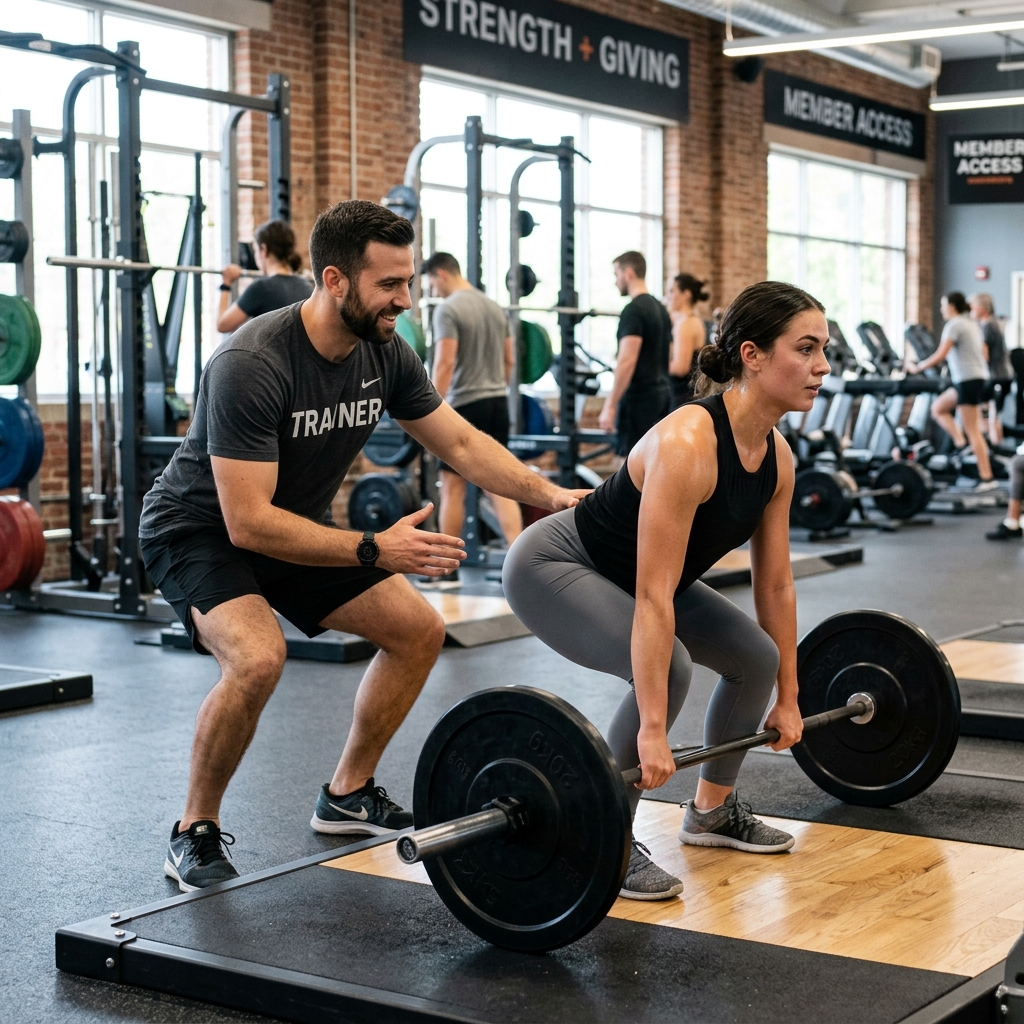
The training stimulus for body recomposition must be strong enough to signal muscle growth while working within an energy budget that also allows fat loss. This means strength training is non-negotiable — and cardio, while not harmful, must be secondary.
Prioritize Compound Strength Movements
Compound exercises — squats, deadlifts, bench press, overhead press, barbell rows, pull-ups — recruit the largest amount of muscle mass per movement and produce the strongest muscle protein synthesis signal. They also burn more calories per session than isolation exercises, helping create the modest caloric deficit needed for fat loss without requiring excessive cardio volume.
Train 3–4 Days Per Week with Progressive Overload
Three to four strength sessions per week hits the optimal balance between training stimulus and recovery during a recomp phase. Each session, you should be working toward progressive overload — adding weight, reps, or reducing rest time compared to previous sessions. Without progressive overload, there is no signal for muscle growth; your body has no physiological reason to invest in new muscle tissue.
Rep Ranges: Primarily 6–15
Research on hypertrophy shows that rep ranges of 6–30 can stimulate muscle growth when taken near failure. For practical recomposition programming, 6–12 reps for primary compound lifts and 12–20 reps for accessory movements hits both strength and hypertrophy effectively. Heavier loads with lower reps build the strength base that allows you to progressively use more weight over time — which drives continued adaptation.
Cardio: Supportive, Not the Focus
Two to three sessions of 20–30 minutes of low-to-moderate intensity cardio per week — walking, cycling, incline treadmill — is sufficient to support cardiovascular health and contribute to the caloric deficit. High-volume, high-intensity cardio, particularly when combined with a caloric deficit, increases cortisol and the risk of muscle catabolism, directly working against your recomp goals. The ratio should be roughly four strength sessions for every two cardio sessions — not the other way around.
How Long Does Body Recomposition Take?
Body recomposition is slower than a dedicated bulk or cut, and managing expectations is critical to staying consistent long enough to see results.
| Profile | Visible Results | Full Transformation |
|---|---|---|
| Beginner (0–1 yr training) | 4–6 weeks | 6–9 months |
| Intermediate (1–3 yrs training) | 8–12 weeks | 9–12 months |
| High body fat (20%+ men / 30%+ women) | 6–8 weeks | 6–12 months |
| Detrained / returning athlete | 4–6 weeks | 4–8 months |
The most important thing to understand: the scale is a poor metric for body recomposition progress. If you lose 10 lbs of fat and gain 10 lbs of muscle over six months, your scale weight has not moved — but your physique has completely transformed. Use progress photos, body measurements (waist, hips, chest, arms, thighs), and strength performance as your primary tracking metrics. The mirror and the barbell will tell you the truth faster and more accurately than the bathroom scale.
Common Body Recomposition Mistakes (And How to Avoid Them)
Eating Too Few Calories
A deficit of more than 400 calories per day while strength training consistently elevates the risk of muscle catabolism. Your body needs adequate energy to support the muscle-building side of the equation. If you are eating 600–700 calories below maintenance and wondering why you are not gaining muscle while losing fat — this is almost certainly the cause.
Not Eating Enough Protein
Most people targeting body recomposition are eating 0.4–0.5g of protein per pound — roughly half of what the research recommends. Doubling protein intake alone, without changing anything else, often produces noticeable recomposition results within 8–12 weeks simply by providing the amino acid substrate that muscle protein synthesis requires.
Doing Too Much Cardio
Running five days a week while strength training twice a week is a fat loss strategy, not a recomposition strategy. Excessive cardio depletes recovery capacity and elevates cortisol, which directly suppresses muscle protein synthesis. Reverse the ratio: four strength sessions and two cardio sessions delivers superior recomposition results for the same weekly time investment.
Not Tracking Progress Accurately
Without data — weekly average bodyweight, monthly tape measurements, quarterly progress photos — it is impossible to know whether your program is working or needs adjustment. Recomposition is slow enough that you will abandon a working program out of frustration if you are measuring only scale weight and seeing no movement.
Not Adjusting the Program Over Time
The program that produces results in month one will plateau by month four if left unchanged. Progressive overload requires continuously increasing the challenge — more weight, more reps, more volume. This is one of the primary reasons working with a coach who reviews and adjusts your program every 3–4 weeks based on actual performance data produces dramatically faster and more consistent results than following a static online program indefinitely.
Body Recomposition Coaching in Charleston, SC

Body recomposition is one of the most technically demanding fitness goals because it requires simultaneous optimization of two opposing processes — fat loss and muscle gain — over an extended timeline. The variables that drive the outcome (caloric intake, protein targets, training volume, progressive overload, recovery quality, bi-weekly program adjustments) are interdependent in ways that make self-coaching extremely difficult, especially for anyone who has ever hit a plateau or quit a fitness program out of frustration.
At Belk Body Lab, I work with clients in Charleston, Mount Pleasant, Summerville, North Charleston, West Ashley, James Island, Daniel Island, Johns Island, Goose Creek, Blue Springs, and across all of South Carolina through a coaching system built specifically around the recomposition framework described in this guide. Every program begins with a detailed assessment of your current body composition, training history, nutritional habits, and lifestyle — then delivers a custom strength training program, individualized macro targets, and weekly progress check-ins with data-driven adjustments every 3–4 weeks.
The result for my clients: the average recomposition client at Belk Body Lab sees first visible physique changes in 6–8 weeks and reaches a full transformation in 5–9 months — significantly faster than the typical self-coached timeline of 12–18 months (when it happens at all). Learn more in our guide to finding the best personal trainer in Charleston, SC.
Belk Body Lab Coaching Packages for Body Recomposition
| Package | Price | Best For |
|---|---|---|
| Starter | $75/month | Custom recomp program + nutrition plan + weekly check-ins + coach messaging |
| Transform ⭐ Most Popular | $199/month | Everything in Starter + priority support + advanced body composition tracking + faster adjustment cycles |
| Elite | $349/month | Maximum support — full concierge coaching, highest accountability, in-person + online sessions combined |
| Free Consultation | $0 | 15–30 min strategy call with Kyle to map out your exact recomposition plan |
For the full pricing breakdown, see our personal trainer cost guide for South Carolina 2026. Ready to start your body recomposition? Apply for a free consultation with Kyle →
Serving clients in person across Charleston, Mount Pleasant, Summerville, North Charleston, West Ashley, Daniel Island, James Island, Johns Island, Goose Creek, and Blue Springs — and online throughout all of South Carolina and nationally.
Questions &
Answers
If your question isn't answered here, reach out directly — Kyle responds personally.
Yes. Body recomposition — simultaneously losing fat and building muscle — is well-documented in exercise science research. It is most pronounced in beginners to strength training, detrained individuals, and those with higher body fat percentages, but even intermediate trainees can achieve meaningful recomposition with a highly optimized approach that prioritizes protein intake and progressive overload.
Protein intake is the single most critical variable. Consuming 0.7–1.0 grams of protein per pound of bodyweight per day (1.6–2.2g per kg) maximizes muscle protein synthesis while preserving lean mass during the modest caloric deficit needed for fat loss. Without adequate protein, no amount of training will produce true body recomposition — your body simply lacks the amino acid substrate to rebuild muscle.
Eat at maintenance calories or a modest deficit of 200–300 calories below maintenance. A larger deficit of 500–700 calories is too aggressive for recomposition and will sacrifice muscle mass. Your rough maintenance calorie intake is approximately 14–16 calories per pound of bodyweight if you are moderately active. Adjust based on weekly bodyweight trends over 2–3 weeks.
Three to four strength training sessions per week is the research-supported sweet spot for body recomposition. Each session should be built around compound movements — squats, deadlifts, bench press, rows, overhead press — with progressive overload applied each week. This frequency delivers enough training stimulus for muscle growth while allowing adequate recovery between sessions.
Moderate cardio (2–3 sessions of 20–30 minutes per week at low-to-moderate intensity) supports fat loss and cardiovascular health without impairing recomposition. Excessive cardio — particularly high-volume running or daily HIIT — raises cortisol and increases muscle catabolism, working directly against the muscle-building side of recomposition. Keep cardio supplementary to strength training, not the primary modality.
Beginners and detrained individuals typically notice visible physique changes in 4–8 weeks. Intermediate trainees usually see clear changes in 8–12 weeks. A full body recomposition — where both fat loss and muscle gain are substantial enough that the physique has noticeably transformed — generally takes 6–12 months of consistent, structured effort with regular program adjustments.
No — the scale is a misleading metric for body recomposition because simultaneous fat loss and muscle gain can leave bodyweight nearly unchanged even while the physique transforms dramatically. Use monthly progress photos, body measurements (waist, hips, chest, arms, thighs), and strength performance as your primary tracking tools. A body that weighs the same but has 12 fewer pounds of fat and 12 more pounds of muscle is a completely different physique.
A high-protein diet at 0.7–1.0g per pound of bodyweight, eaten at maintenance calories or a 200–300 calorie daily deficit, with carbohydrates timed around training sessions and dietary fat at 20–25% of total calories. Specific foods matter less than hitting protein targets and total calories consistently. Whole, minimally processed foods make hitting those targets significantly easier.
Technically yes, but the failure rate is high. Body recomposition requires simultaneous optimization of nutrition, training, recovery, and program adjustments every 3–4 weeks as your body adapts. Most self-coached attempts plateau within 8–12 weeks because the program is not updated. A coach with a structured feedback system typically cuts the recomposition timeline by 30–50% and dramatically increases the consistency needed to see results.
Absolutely. Women respond to body recomposition as effectively as men — and often experience proportionally excellent fat loss results. Women naturally carry more essential body fat but respond equally well to progressive strength training and high-protein nutrition. Many of the most dramatic body recomposition transformations at Belk Body Lab have been achieved by female clients who combined consistent strength training with optimized nutrition.
Cutting means eating in a significant caloric deficit to lose fat (at the cost of some muscle). Bulking means eating in a caloric surplus to maximize muscle gain (at the cost of fat gain). Body recomposition is the approach targeting simultaneous fat loss and muscle gain near maintenance calories — slower than dedicated cutting or bulking phases, but more sustainable and more rewarding for most people who want to look better without extreme diet phases.
Yes, with appropriate adjustments. After 40, recovery capacity decreases and hormonal changes slow both fat loss and muscle gain. However, the core recomposition framework — high protein, strength training 3–4x weekly, modest caloric deficit — still produces meaningful results. Clients over 40 at Belk Body Lab consistently achieve body recomposition; they may take 20–30% longer than younger clients to reach the same outcomes, but the results are absolutely achievable with consistency and a well-structured program.
Belk Body Lab offers fully customized body recomposition coaching in Charleston, SC and throughout South Carolina. NASM-certified coach Kyle Belk designs individualized strength training programs and nutrition plans, adjusted every 3–4 weeks based on your actual progress data. In-person sessions are available across Charleston, Mount Pleasant, Summerville, North Charleston, West Ashley, and surrounding areas. Online coaching is available statewide and nationally. Book a free consultation at belkbodylab.com/contact.
Losing weight means reducing total bodyweight — which often includes losing both fat and muscle simultaneously. Body recomposition specifically targets fat loss while preserving or increasing muscle mass. This distinction is critical: two people can both weigh 160 lbs, but the one with 30% body fat looks dramatically different from the one with 18% body fat. Recomposition optimizes body composition (fat-to-muscle ratio), not just the number on the scale.