
glp-1 & ozempic strength training: how to preserve muscle while losing weight in south carolina
If you are losing weight on Ozempic, Wegovy, Mounjaro, or Zepbound, there is a hard truth your prescribing doctor may not have time to explain in a 15-minute appointment: not all of the weight coming off is fat. As a NASM-certified personal trainer in Charleston, South Carolina who now coaches a growing number of clients using GLP-1 receptor agonists, I have watched this medication class change the fat loss conversation entirely. GLP-1s are remarkably effective at suppressing appetite and driving the scale down. But without a deliberate strength training and protein strategy running alongside the medication, a significant percentage of that weight loss is lean muscle tissue — not just fat. This guide breaks down exactly why that happens, what the research shows, and the specific training protocol I use with GLP-1 clients across Charleston, Mount Pleasant, Summerville, and online throughout South Carolina to protect muscle while the medication does its job.

Why GLP-1 Medications Cause Muscle Loss
GLP-1 receptor agonists — semaglutide (Ozempic, Wegovy) and tirzepatide (Mounjaro, Zepbound) — work by mimicking gut hormones that suppress appetite, slow gastric emptying, and improve insulin sensitivity. The result is a substantial, sustained caloric deficit, often without the person consciously trying to restrict food. That is the mechanism that makes these drugs so effective for weight loss. It is also exactly why muscle loss becomes a risk.
When your body enters a steep caloric deficit — especially a rapid one — it does not selectively burn fat. In the absence of a strong signal telling it to preserve muscle, your body treats muscle tissue as an available energy reserve, right alongside fat stores. Clinical trial data on semaglutide and tirzepatide has repeatedly shown that a meaningful share of total weight lost on these medications is lean mass rather than fat mass, with figures in published research and clinical commentary commonly cited in the range of roughly a quarter to nearly forty percent of total weight lost, depending on the study population, age, baseline muscle mass, and whether participants were doing any resistance training at all. Compare that to a typical diet-and-exercise weight loss program without medication, where lean mass loss is usually closer to 10-25% of total weight lost when resistance training is included — and the gap becomes clear.
This is not a reason to avoid GLP-1 medications. For many people managing obesity, prediabetes, or metabolic disease, these drugs are genuinely life-changing. It is a reason to pair the medication with a training and nutrition strategy specifically designed to protect the muscle you already have.
Why Muscle Preservation Matters More Than the Number on the Scale
I tell every GLP-1 client the same thing in their first session: the scale does not tell you what you actually lost. Two people can both lose 40 pounds on Ozempic — one loses mostly fat and keeps their strength, metabolic rate, and shape; the other loses a large percentage of muscle along with the fat and ends up lighter, weaker, and softer-looking despite the smaller number. This second outcome is often described informally as "Ozempic body" — a lower body weight paired with a loss of muscle tone, looser skin, and a body composition that looks and feels noticeably different from what most people picture when they imagine "losing weight."
- Metabolic rate: Muscle is metabolically active tissue. Losing it lowers your resting metabolic rate, which makes long-term weight maintenance harder once you eventually taper off or stop the medication.
- Functional strength: Significant lean mass loss, particularly in older adults, accelerates the path toward sarcopenia — age-related muscle loss that increases fall risk, reduces independence, and is linked to higher all-cause mortality.
- Body composition and appearance: Fat loss without muscle preservation often produces a "skinny fat" look rather than the toned, defined physique most people actually want when they say they want to "lose weight."
- Rebound risk: A lower resting metabolism from lost muscle makes it easier to regain fat if the medication dose changes, is paused, or is discontinued — a scenario an increasing number of my South Carolina clients are now navigating.
"GLP-1 medications are a phenomenal appetite management tool. But they are not a substitute for a training stimulus. If you are not lifting weights and eating enough protein, you are not just losing weight on Ozempic — you're losing your muscle right along with it." — Kyle Belk, NASM-CPT
The Four Pillars of Muscle Preservation on GLP-1s
Every GLP-1 coaching client at Belk Body Lab follows the same four-pillar framework. This is not complicated, but it does require intention — because appetite suppression makes it genuinely difficult to eat enough protein and easy to skip training when energy is low.
- Progressive resistance training at least 2-4x per week, prioritizing compound movements
- Elevated protein intake relative to a standard diet, because appetite suppression makes total calorie intake — and therefore total protein — naturally lower
- Conservative rate of weight loss where possible, since more gradual loss is consistently associated with better lean mass retention
- Recovery management — sleep and stress control, since GLP-1 users frequently report fatigue that can sabotage training consistency if left unmanaged
Protein Targets for GLP-1 Users
This is the single biggest gap I see in new GLP-1 clients' nutrition. Appetite suppression is so strong that many people are eating 900-1,200 total calories a day without trying to, and protein is often the first thing to fall short because it requires more deliberate meal planning than simply eating less of everything.
Because total food volume is already reduced by the medication, I set protein targets on the higher end of the evidence-based range — generally 0.7 to 1.0 grams per pound of goal body weight, prioritized at every single meal rather than back-loaded at dinner.
| Goal Body Weight | Daily Protein Target | Approx. Meals Needed |
|---|---|---|
| 130 lbs | 90-130g | 3-4 meals of 25-35g protein |
| 150 lbs | 105-150g | 3-4 meals of 30-40g protein |
| 180 lbs | 125-180g | 4 meals of 30-45g protein |
| 200 lbs | 140-200g | 4 meals of 35-50g protein |
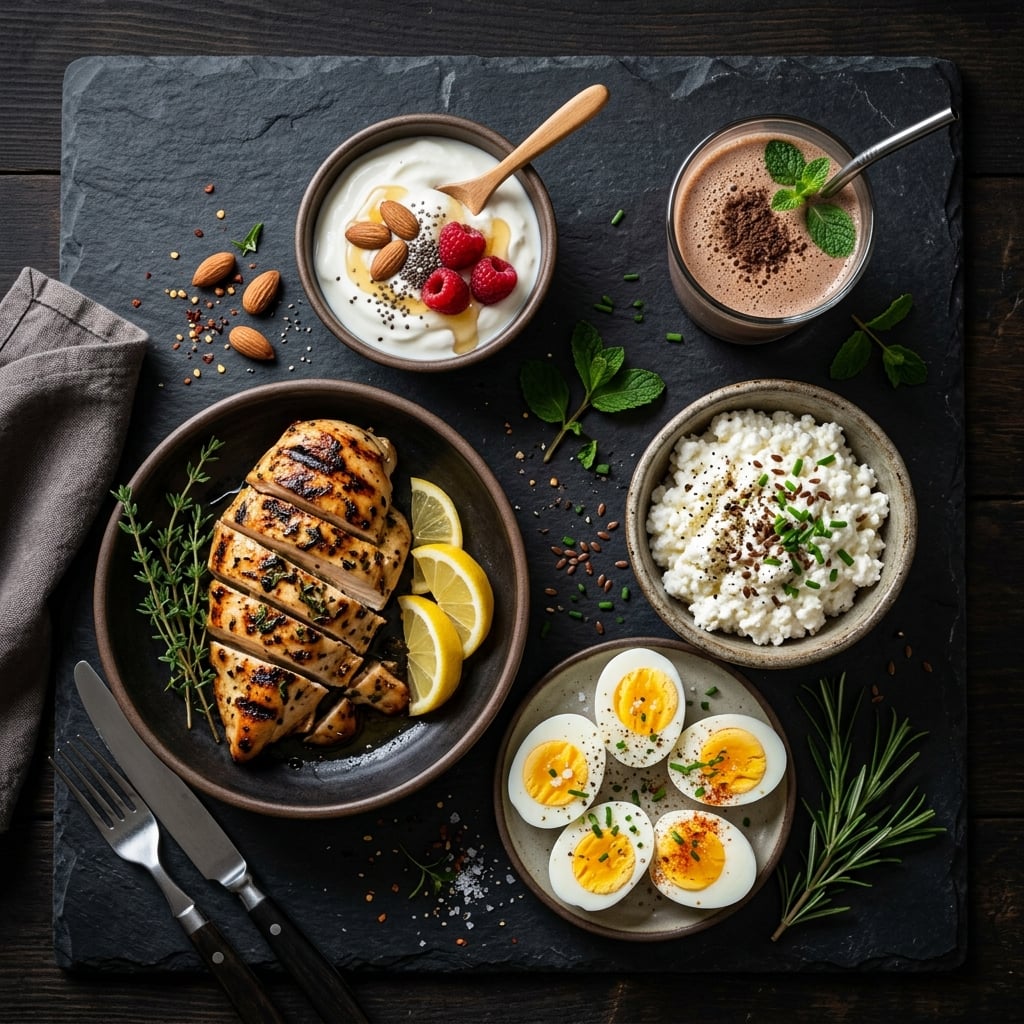
When appetite is severely suppressed, I have clients prioritize protein-dense, lower-volume foods first: whey or casein protein shakes, Greek yogurt, cottage cheese, eggs, and lean meats. A 30-gram protein shake takes up far less stomach volume than a chicken breast, which matters enormously when a client can only comfortably eat a few hundred calories per sitting. For a deeper breakdown of building out the rest of your macros, see our complete macro guide, and if a rapid deficit is a concern, our science-based fat loss guide covers how to avoid losing muscle to an overly aggressive deficit.
The Strength Training Protocol I Use With GLP-1 Clients
Training on an appetite suppressant requires a different approach than a standard fat loss program. Energy availability is lower, recovery capacity is often reduced, and the priority shifts from "burn more calories" to "send the strongest possible signal to preserve muscle" with the least metabolic cost.
Core Principles:
- Prioritize compound lifts: Squats, deadlifts, presses, rows, and pulldowns recruit the most muscle mass per set, giving you the biggest preservation signal for the least total training volume — critical when energy is limited.
- Train close to failure on working sets: Muscle preservation research consistently shows that training intensity (how close to failure you train) matters more than training volume for maintaining lean mass in a deficit.
- Lower total volume than a typical hypertrophy program: Because recovery capacity is often reduced on GLP-1s, I program fewer total sets per muscle group than I would for a client not on the medication, while keeping intensity high.
- Full-body or upper/lower splits over broad muscle-group splits: Hitting each muscle group 2x per week with a full-body or upper/lower structure preserves more muscle than isolated "bro splits" during a deficit.
Sample Weekly Training Split (GLP-1 Muscle Preservation Protocol)
| Day | Focus | Key Lifts |
|---|---|---|
| Monday | Full Body A | Squat, Bench Press, Row, Plank |
| Tuesday | Rest or Walk (8,000+ steps) | Recovery focus |
| Wednesday | Full Body B | Deadlift, Overhead Press, Pulldown, Carry |
| Thursday | Rest or Walk | Recovery focus |
| Friday | Full Body C | Leg Press, Incline Press, Cable Row, Core |
| Sat/Sun | Optional light activity | Walking, mobility work |
This structure gives every major muscle group two high-quality training stimuli per week while respecting the reduced recovery bandwidth many GLP-1 users experience. For clients further along in their protocol with more training capacity, we progress toward the compound lift progressions in our fat loss exercise guide.

Common Mistakes GLP-1 Users Make in the Gym
- Doing only cardio: Cardio does not send a strong muscle-preservation signal. Walking is excellent for overall health and fat loss support (see our walking for weight loss guide), but it cannot replace resistance training for muscle retention.
- Chasing a workout "burn" instead of progressive overload: Muscle preservation depends on your body having a reason to keep the tissue — that reason is mechanical tension from resistance training, not calories burned in a session.
- Under-eating protein because appetite is suppressed: This is the single most common and most damaging mistake. Protein has to be prioritized deliberately; it will not happen by accident when appetite is this low.
- Losing weight too fast: Faster weight loss is consistently associated with a higher proportion of lean mass lost. If your dose or diet is producing rapid loss, that is a conversation to have with both your prescribing physician and your trainer.
- Skipping strength training on "low energy" days: A shorter, lower-volume session is almost always better than skipping entirely. Even 20 minutes of compound lifting preserves far more muscle than zero training.
Working With a Trainer While on GLP-1 Medication
An increasing number of physicians in the Charleston area are now referring patients starting GLP-1 medications directly to strength coaches, recognizing that medication alone — without a resistance training plan — leaves too much muscle mass on the table. At Belk Body Lab, GLP-1 coaching clients get a protocol built specifically around their current appetite level, energy capacity, and where they are in their prescribed dosing timeline, adjusted in real time as their tolerance and hunger levels shift. This is different from a generic fat loss program; it accounts for the unique physiological environment these medications create, from lower training volume tolerance in the early weeks of dose escalation to the higher protein prioritization needed throughout. If you are weighing whether in-person or online coaching fits your schedule better, or want to know exactly what to look for in a trainer who understands GLP-1 protocols, those guides break down what to expect.
Whether you are just starting a GLP-1 prescription or you are months into your protocol and noticing your strength or muscle tone slipping, the fix is the same: a structured resistance training plan and a protein target you actually hit every day, not just on your best days.
How Your Training Should Change Across Your Dosing Timeline
Muscle preservation on a GLP-1 medication is not a "set it and forget it" protocol — your training and nutrition strategy needs to evolve as your dose, appetite, and tolerance change over months. I break this into three phases with every coaching client:
- Titration phase (first 4-8 weeks, lower doses): Appetite suppression is usually milder here, side effects like nausea are more common, and energy for training is often the most affected. I keep session length shorter (30-40 minutes) and prioritize consistency over intensity while your body adjusts.
- Active weight loss phase (months 2-9, therapeutic dose): This is where appetite suppression is strongest and the muscle-preservation stakes are highest. Protein prioritization and resistance training frequency both need to be at their peak during this window, since this is when the largest share of total weight loss — and the largest muscle-loss risk — occurs.
- Maintenance phase (dose stabilized or tapering): As appetite normalizes somewhat, this is the window to add back training volume and intensity, since recovery capacity typically improves. It's also when many clients are physically able to build noticeable muscle for the first time in the process, not just preserve what they have.
Tracking strength numbers session to session — not just body weight — is one of the most useful tools during this process. If your working weights on your main lifts are holding steady or climbing slightly even as the scale drops, that is strong evidence you are losing predominantly fat. If your strength is dropping sharply alongside the scale, that is a signal to increase protein, reduce training volume slightly to allow more recovery, or discuss your rate of loss with your prescribing physician.
A Sample Day of Eating for Muscle Preservation on a GLP-1
Because appetite is often the limiting factor, structure matters more than variety in the early months. Here is a simplified example day for a client with a 150 lb goal body weight targeting roughly 120g of protein:
| Meal | Example | Protein |
|---|---|---|
| Breakfast | 1 scoop whey protein + Greek yogurt | ~35g |
| Lunch | 4-5 oz grilled chicken or white fish + vegetables | ~30g |
| Snack | Cottage cheese or protein shake | ~25g |
| Dinner | 4 oz lean protein + small portion of complex carbs | ~30g |
Notice this is built around protein-dense foods first, with everything else — vegetables, complex carbs, fats — filled in around what appetite allows, rather than trying to force a full "balanced plate" at every meal when total food volume tolerance is limited.
GET YOUR GLP-1 MUSCLE PRESERVATION PROTOCOL
Don't let the scale go down while your muscle goes with it. Get a strength training and protein protocol built specifically for your GLP-1 medication, dose, and goals by a NASM-certified coach in South Carolina.
Apply for Coaching →Questions &
Answers
If your question isn't answered here, reach out directly — Kyle responds personally.
Ozempic itself does not directly target muscle, but the rapid caloric deficit it creates through appetite suppression can lead to significant lean mass loss if you are not doing resistance training and eating adequate protein. Research on GLP-1 medications has found that a substantial share of total weight lost can be lean mass rather than fat, particularly without a structured training plan.
Published research and clinical observation suggest lean mass can account for roughly a quarter to nearly forty percent of total weight lost on GLP-1 medications, compared to about 10-25% with diet and resistance training alone. The exact amount depends on age, baseline muscle mass, rate of weight loss, and whether you are strength training.
Yes. The most effective strategy is combining progressive resistance training 2-4 times per week with a higher protein intake (0.7-1.0g per pound of goal body weight) prioritized at every meal. Slower, more gradual weight loss also helps preserve a higher percentage of lean mass.
Because appetite suppression naturally lowers total food intake, aim for 0.7 to 1.0 grams of protein per pound of your goal body weight, spread across 3-4 meals. Protein shakes, Greek yogurt, cottage cheese, and lean meats are efficient options when appetite is limited.
Yes, strength training is the single most important factor in preserving muscle mass while taking a GLP-1 medication. Prioritize compound movements like squats, deadlifts, presses, and rows 2-4 times per week, training close to failure on your working sets.
Reduced caloric intake, slower gastric emptying, and lower carbohydrate consumption can all reduce training energy, especially during dose escalation. Programming shorter, lower-volume sessions with adequate protein and hydration usually helps manage this fatigue without sacrificing muscle preservation.
"Ozempic body" refers to significant weight loss accompanied by noticeable muscle loss, loose skin, and a "skinny fat" appearance rather than a toned physique. It is avoided primarily through consistent resistance training and adequate protein intake throughout your weight loss, not just at the end.
An increasing number of physicians now recommend or directly refer patients to strength coaches when prescribing GLP-1 medications, recognizing that resistance training significantly improves body composition outcomes compared to medication and diet changes alone.
Most clients see the best muscle preservation results training 3 times per week using a full-body or upper/lower split that hits each major muscle group twice weekly, combined with adequate recovery and daily walking.
Stopping a GLP-1 medication does not directly cause muscle loss, but appetite often returns, which can lead to weight regain if resistance training and higher protein habits built during the medication period are not maintained.
Resistance training is significantly more effective than cardio for muscle preservation. Cardio and daily walking support overall fat loss and cardiovascular health, but only progressive resistance training provides the mechanical stimulus needed to retain lean mass in a deficit.
Yes. Belk Body Lab builds GLP-1-specific coaching protocols that account for your appetite level, energy capacity, and dosing timeline, combining a tailored resistance training plan with protein-focused nutrition guidance for clients throughout Charleston, Mount Pleasant, Summerville, and online across South Carolina.