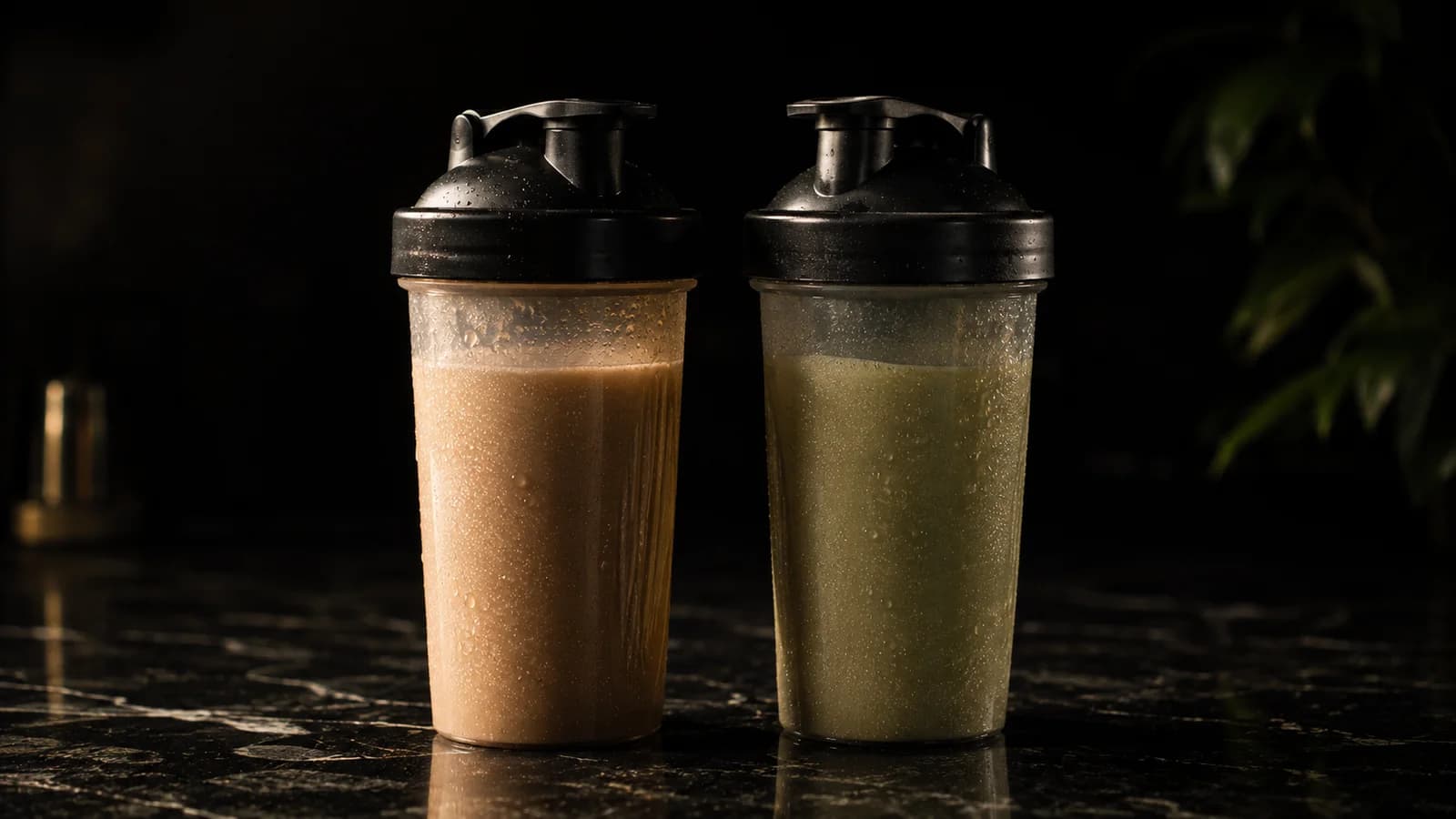
whey vs. plant-based protein powder: what actually matters for results
By Kyle Belk · NASM-Certified Personal Trainer · Belk Body Lab, Charleston SC · 12 min read · Updated September 1, 2026
Whey digests faster and carries more leucine per gram than most single-source plant proteins, which gives it a small edge for muscle protein synthesis per serving. A well-built multi-source plant blend closes most of that gap once you dose it properly. For anyone who isn't an elite athlete, hitting your daily protein target consistently matters far more than which tub you buy.
Key Takeaways
- Leucine is the trigger. Muscle protein synthesis switches on when a meal delivers roughly 2 to 3 grams of leucine, and whey packs that into a smaller serving than any plant source does.
- Whey's edge is real but small. Whey concentrate and isolate score above 100 on the DIAAS protein quality scale, while pea protein concentrate sits around 73. That's a meaningful gap on paper and a much smaller one in practice.
- Multi-source blends fix the amino acid problem. Pea is short on methionine, rice is short on lysine, and together they cover each other. Bump the scoop size by about a third and you've matched whey's leucine dose.
- Your actual deciding factors are boring. Cost, whether it wrecks your stomach, whether you'll drink it every day, and whether it fits your dietary lines matter more than a percentage point of amino acid efficiency.
- Total daily protein wins. Once a powder clears a basic quality bar, how much protein you eat across the whole day drives your results. Nothing on the label beats consistency.
Quick Answer
Whey wins per gram. It's more leucine-dense, digests faster, and scores higher on every protein quality metric we have. But a good multi-source plant blend at a slightly larger serving gets you to the same place, and the head-to-head training studies back that up. Buy whey if dairy sits fine with you and you want the cheapest path to your protein target. Buy a pea-and-rice blend if dairy doesn't sit fine, if you're vegan, or if you just prefer it, and then dose it a little heavier without a second thought.
On this page
- How Protein Actually Builds Muscle: The Leucine Threshold
- Whey Protein: Strengths and Weaknesses
- Plant-Based Protein: Strengths and Weaknesses
- Head-to-Head Comparison Table
- Does the Small Performance Gap Actually Matter for You?
- How to Choose a Good Plant-Based Protein
- How to Choose a Good Whey Protein
- Who Should Lean One Way or the Other
- Your Next Step
How Protein Actually Builds Muscle: The Leucine Threshold
Your muscle tissue is constantly being torn down and rebuilt. Training accelerates the tearing down. Protein feeds the rebuilding. The rebuilding process has a name, muscle protein synthesis, and it doesn't run at a steady hum. It spikes after you eat protein, stays elevated for a few hours, then drops back to baseline.
What flips the switch isn't protein in general. It's mostly one amino acid: leucine.
Leucine activates a signaling pathway called mTOR, which is the cell's construction foreman. Enough leucine hits the bloodstream, mTOR gets the message, and synthesis ramps up. Not enough leucine and the response is weak even if you technically ate protein. That's the whole reason a scoop of collagen doesn't build muscle the way a scoop of whey does.
How much leucine actually pulls the trigger
The number people throw around is 2 to 3 grams per meal. That figure comes from a set of dose-response studies where researchers fed subjects escalating amounts of high-quality protein and measured what happened to synthesis rates. Moore and colleagues found the response to whole-egg protein plateaued around 20 grams after resistance exercise. Witard's group found something similar with whey, where 20 grams maximally stimulated synthesis and 40 grams mostly went to oxidation and urea production instead of muscle. Twenty grams of whey delivers roughly 2.5 grams of leucine, which is where the threshold number comes from.
It's not a hard cutoff, and researchers argue about how literally to take it. A 2021 systematic review in Frontiers in Nutrition looked at the leucine trigger hypothesis directly and found it holds up reasonably well for isolated protein sources like whey and soy, and much less well for whole foods like beef or milk, where synthesis climbs fine without a dramatic leucine spike (Zaromskyte et al., 2021). There's also work showing 40 grams beats 20 grams after a full-body session rather than a single-limb one, which suggests the ceiling shifts with how much muscle you just trained (Macnaughton et al., 2016).
So treat 2 to 3 grams of leucine as a working target per protein feeding, not a law of physics. Here's where the common powders land.
| Protein source | Leucine as % of protein | Leucine in a 25 g protein serving |
|---|---|---|
| Whey protein concentrate | ~11–12% | ~2.7–3.0 g |
| Whey protein isolate | ~11–12% | ~2.8–3.0 g |
| Soy protein isolate | ~8% | ~2.0 g |
| Pea protein concentrate | ~7.5% | ~1.9 g |
Percentages derived from the amino acid composition data in Mathai, Liu & Stein (2017), British Journal of Nutrition. Commercial products vary, sometimes a lot.
Look at the spread. Pea gives you about 1.9 grams of leucine where whey gives you close to 3. That's the entire scientific case for whey in one row. It's also, as you'll see, a problem with an obvious fix.
None of this matters if your daily total is short, by the way. I've written about that in more detail in the macros guide, but the short version is that most people asking me about leucine thresholds are eating 90 grams of protein a day and worrying about the wrong variable.
Whey Protein: Strengths and Weaknesses
Whey is what's left over when milk gets turned into cheese. For decades it was a waste product. Now it's the best-studied sports supplement on the shelf.
What whey does well
It's complete, meaning it contains all nine essential amino acids in useful amounts, and it's rich in the ones that matter most for muscle. It also digests fast. Amino acids from whey show up in your bloodstream quickly and in a sharp spike, which is exactly the pattern that drives a strong synthesis response.
The quality scores back this up. On DIAAS, the current gold-standard measure of protein quality, whey protein concentrate scored 133 and whey protein isolate scored 125 using the adult reference pattern in Mathai and Stein's 2017 analysis. Anything above 100 is considered excellent quality. Pea protein concentrate in that same study came in at 73.
Concentrate, isolate, hydrolysate
Three forms, and the differences are simpler than the marketing makes them sound.
Concentrate runs roughly 70 to 80 percent protein by weight, keeps some lactose and fat, tastes better, and costs the least. It's the default choice unless you have a reason to upgrade. Isolate is filtered further to 90 percent or more protein, with most of the lactose stripped out, which makes it the right call if dairy sugar bothers your gut. Hydrolysate is pre-broken-down whey that absorbs marginally faster and costs noticeably more. Unless you're an athlete doing multiple sessions in a day, I don't think it's worth the premium.
Where whey falls down
Lactose is the big one. Concentrate carries enough that a fair number of people get bloating, gas, or cramping from it, and they often blame "protein powder" in general when the fix is just switching to isolate. If you have an actual dairy allergy, none of the whey forms work, including isolate, because the issue is the milk protein itself and not the sugar.
Then there are the reasons that have nothing to do with digestion. Some people don't want to consume dairy for ethical reasons. Some are weighing environmental impact. Those are legitimate inputs to a purchasing decision and I'm not going to talk anyone out of them, especially since the performance cost of choosing plant instead is as small as it is.
Plant-Based Protein: Strengths and Weaknesses
The knock on plant protein is that it's incomplete, and for single sources that's basically accurate. Pea protein runs low on methionine. Rice protein runs low on lysine. Each one has a limiting amino acid that caps how efficiently your body can use the whole serving, the way a missing part stops an assembly line no matter how much of everything else you have.
Which is why nobody serious sells single-source plant powder for muscle building anymore. Blend pea with rice and pea's lysine covers rice's shortfall while rice's methionine covers pea's. The combined amino acid profile ends up looking a lot more like whey than either one does alone. Soy, worth noting separately, is already complete on its own and scored 98 on DIAAS in that Stein data, which puts it right at the edge of the high-quality band.
The underrated upside
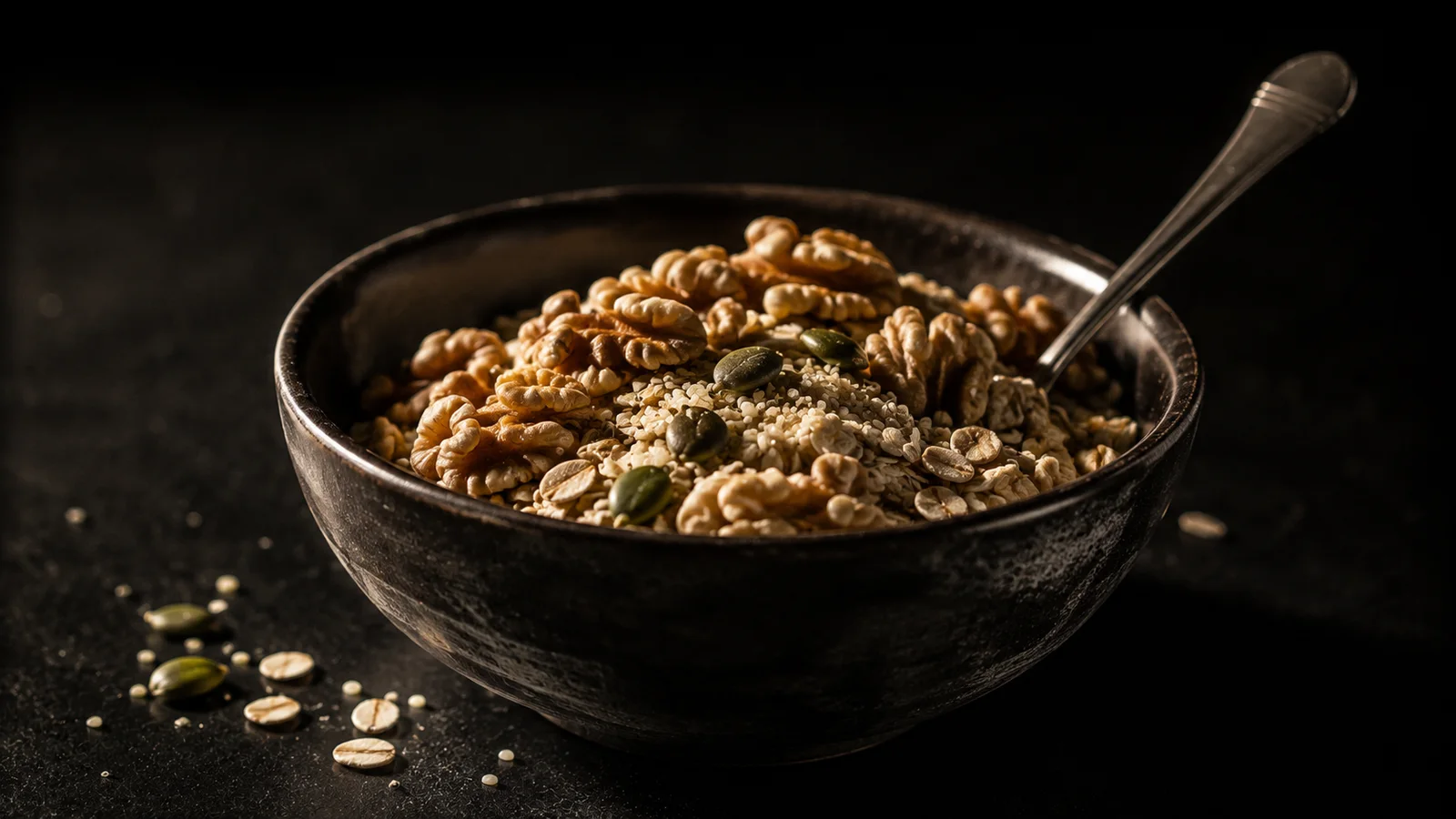
Plant powders usually bring fiber and micronutrients along for the ride. Pea protein carries iron. Hemp and pumpkin seed contribute magnesium and zinc. Most whey isolates give you protein and essentially nothing else, which is fine, but if you're the kind of person whose fiber intake is a running joke, the plant version is quietly doing you a favor. Several of my clients also find the blends more filling, which helps a lot during a calorie deficit.
The real weakness nobody mentions
Leucine content varies wildly between brands and most labels don't tell you what it is. Two tubs can both say "25 g protein" on the front and deliver meaningfully different leucine doses depending on the source ratio inside the blend. A pea-heavy formula and a soy-heavy formula are not the same product.
You often have to hunt for the full amino acid breakdown on the manufacturer's website, and if a brand won't publish it, that tells you something. Independent testing has also found that plant-based powders show wider gaps between label claims and actual tested protein content than whey does, which is a good argument for buying from brands that submit to third-party verification.
Head-to-Head Comparison Table
| Metric | Whey Protein | Plant-Based Blend (pea + rice or similar) |
|---|---|---|
| Protein per scoop | Typically 24–30 g from a single ~30 g scoop | Typically 20–25 g, often from a larger 35–40 g scoop |
| Leucine per scoop (typical) | ~2.5–3.0 g | ~1.6–2.2 g, varies heavily by formulation |
| Protein quality (DIAAS, adult pattern) | 133 concentrate, 125 isolate | Pea concentrate 73, soy isolate 98; blends land higher than pea alone but published values for specific commercial blends are scarce |
| Typical cost per gram of protein | Roughly $0.03–0.05 for concentrate, $0.04–0.07 for isolate | Roughly $0.04–0.08, with organic and certified options at the top end |
| Common allergens and intolerances | Lactose (concentrate especially), milk protein allergy affects all forms | Soy if present in the blend; gluten in some rice or oat-based products; generally dairy-free |
| Environmental footprint | Higher on land, water, and emissions than legumes, though whey is a co-product of cheesemaking rather than its own dedicated production line | Generally lower across land, water, and emissions, with processing intensity varying by brand |
DIAAS values from Mathai, Liu & Stein (2017). Cost ranges are US retail estimates at time of writing and move constantly, so run the math on the specific tubs you're comparing: price divided by (servings × grams of protein per serving).
Does the Small Performance Gap Actually Matter for You?
Here's where the acute lab data and the real-world training data start to disagree, and the disagreement is the most useful part of this whole topic.
What the short-term studies show
Acute studies measure synthesis rates in the hours after a single dose. Those consistently favor animal protein. Van Vliet, Burd and van Loon reviewed this in The Journal of Nutrition and concluded that soy and wheat produce a lower muscle protein synthetic response than several animal proteins, pointing at lower digestibility, more amino acid extraction by the gut and liver before the aminos reach muscle, and generally lower leucine content (van Vliet et al., 2015). That's a real finding and I'm not going to hand-wave it away.
What the training studies show
Then you run the same comparison over twelve weeks of actual lifting and the difference mostly evaporates.
Babault's group put 161 men through 12 weeks of upper-body resistance training with 25 grams of pea protein isolate twice daily, 25 grams of whey concentrate twice daily, or placebo. Biceps thickness increased across the board, and between-group differences only reached a trend rather than significance. In a sub-analysis of the weakest participants, thickness gains were 20.2 percent for pea, 15.6 percent for whey, and 8.6 percent for placebo (Babault et al., 2015). Worth flagging that a pea protein manufacturer funded that one, so don't read it as pea beating whey. Read it as pea keeping up.
The cleaner study came out of São Paulo. Hevia-Larraín and colleagues took 19 habitual vegans and 19 omnivores, brought everyone up to 1.6 g of protein per kg of bodyweight per day using soy protein for the vegans and whey for the omnivores, and ran them through 12 weeks of supervised lower-body training. Muscle mass and strength gains came out statistically indistinguishable between groups (Hevia-Larraín et al., 2021).
Match the total protein, train hard, and the source stops mattering. That's the finding.
The decision framework I actually use with clients
Three questions, in this order.
First: does dairy cause you problems? If it does, the conversation is over and you're buying plant. No amount of leucine density is worth spending your afternoon uncomfortable.
Second: are you competing at a level where a two or three percent difference in per-serving efficiency could plausibly show up in your results? For maybe one client in fifty, that's a genuine yes. For everyone else it's noise sitting several layers below sleep, training consistency, and whether they eat enough on weekends.
Third: which one will you actually drink every day for the next six months? This is the question that decides it for most people and almost nobody asks it out loud. A slightly less efficient protein you enjoy beats an optimal one sitting in your pantry.
One of my clients, mid-thirties, had been on whey concentrate for years and spent most afternoons bloated and blaming her lunch. We swapped her to a pea-and-rice blend and bumped her serving from one scoop to a scoop and a half so the leucine matched what she'd been getting. Fourteen weeks later her deadlift was up 35 pounds, her body composition was tracking exactly where we'd projected, and the bloating was gone. Her words, roughly: "so I was just doing that to myself for four years." Same results. Different powder. The only thing that changed was that she stopped dreading the shake.
If you're chasing fat loss and muscle gain at the same time, the source question matters even less than usual and the total intake question matters even more. That's covered in the body recomposition guide.
How to Choose a Good Plant-Based Protein
- Buy a multi-source blend, not a single source. Pea plus rice is the most common and most researched combination. Pea plus rice plus pumpkin or hemp is fine too. A tub that's only pea protein is leaving amino acids on the table for no reason.
- Find the leucine number before you buy. Check the label, and if it isn't there, check the brand's website or email them. You want at least 2 grams per serving, and closer to 2.5 is better. A brand that won't publish its amino acid profile in 2026 is hiding something or doesn't have the data, and neither is a good sign.
- Size the serving to hit the target, not to match whey's scoop. If your blend delivers 1.8 grams of leucine per scoop, use a scoop and a half. This is the single most important adjustment on this entire page and it costs you about forty extra calories.
- Look for third-party testing. NSF, Informed Sport, or Labdoor. Plant powders have historically shown wider variance between label claims and tested content, and testing also screens for heavy metals, which is a legitimate concern with plant-sourced ingredients grown in variable soil.
- Read past the protein number on the front. Some blends pad the tub with cheap fillers, gums, and a stack of sweeteners. If the ingredient list is longer than your grocery list, look elsewhere.
- Taste-test before you commit to a five-pound tub. Plant protein has a chalkier texture than whey. It's improved enormously in the last few years but it's still different, and buying a single-serving packet first has saved several of my clients about sixty dollars.
How to Choose a Good Whey Protein
- Start with concentrate unless you have a reason not to. It's cheaper, it tastes better, and for most people it digests fine. There's no prize for buying the expensive version by default.
- Switch to isolate if lactose is an issue. If concentrate gives you bloating or gas, isolate solves it about ninety percent of the time because most of the lactose is filtered out. Try that before you conclude protein powder in general doesn't agree with you.
- Get NSF Certified for Sport or Informed Sport if you're drug-tested. Collegiate athletes, tested powerlifting federations, military. If that's you, this isn't optional. If you're a recreational lifter, it's nice but you can skip it and save money.
- Check the sugar and the total carbs. A depressing number of mainstream tubs are carrying 8 to 12 grams of added sugar per serving. You're buying protein, so buy protein.
- Avoid proprietary blends and "protein matrix" labels. If a brand won't tell you how much of each protein source is in there, assume the ratio favors whatever's cheapest.
- Do the per-gram math before you check out. Price divided by total grams of protein in the tub. A 5-pound tub that looks expensive is frequently the better deal, and the flashy 2-pound one on sale usually isn't.
Who Should Lean One Way or the Other
- Lactose intolerant or dairy allergic → plant. Try whey isolate first if it's just lactose, since that often solves it. A genuine milk protein allergy rules out all whey, no exceptions.
- Vegan or vegetarian → plant, dosed deliberately. Use a blend, aim for 30 to 40 grams of protein per serving rather than 25, and verify the leucine. You will get the same results as anyone else. The research on this is unambiguous.
- Cost-sensitive with no dietary restrictions → whey concentrate. It's usually the cheapest protein per gram on the shelf and it works. Nothing about that is a compromise.
- Prioritizing environmental or ethical impact → plant. The performance cost of that choice is small enough that I'd never argue against it. Just dose it correctly and get on with your training.
- Older lifters, roughly 55 and up → whichever, but eat more of it. Anabolic resistance is real and the per-meal protein dose needs to go up regardless of source. That's a bigger lever than whey versus plant will ever be.
- Chronic stomach issues with both → look at the additives. Sugar alcohols, inulin, and certain gums cause more digestive trouble than the protein itself in a lot of cases. Try a plainer formula before giving up on powder entirely.
Your Next Step
Pick the one that fits your gut, your budget, and your values, dose it to hit 2 to 3 grams of leucine per serving, and then stop thinking about it. The powder is somewhere around the twelfth most important variable in your results. Your daily protein total, your training program, and whether you show up consistently for six months are the first three.
If you're not sure what your protein target should be or how to build the training that makes it worth eating, that's what we do. Start with the beginner muscle-building plan if you're early in this, or take a look at our coaching services if you want a program built around your actual schedule and body. You can also just reach out and tell me what you're working with. I answer these myself.
Questions &
Answers
If your question isn't answered here, reach out directly — Kyle responds personally.
Yes, when you match the total protein and the leucine dose. Whey has a small per-gram edge because it's more leucine-dense and digests faster, but 12-week training studies comparing soy or pea against whey have found no meaningful difference in strength or muscle gains. The gap shows up in acute lab measurements and mostly disappears in the real world.
Roughly 25 to 35 percent more per serving. If you'd normally use 25 grams of whey, aim for 30 to 40 grams from a plant blend to land in the same leucine range. Practically that's a scoop and a half instead of a scoop, and it costs you a few extra calories and a little more powder.
For some people, yes, and it's usually the lactose rather than the protein. Whey concentrate holds enough milk sugar to cause gas and cramping in anyone with even mild lactose sensitivity. Switch to whey isolate, which has most of the lactose filtered out, before you write off protein powder entirely. If isolate still bothers you, the issue might be the sweeteners or gums in the formula.
A pea-and-rice blend is the most reliable pick. Pea covers rice's lysine shortfall and rice covers pea's methionine shortfall, so together they get close to a complete profile. Soy protein isolate is also a strong option on its own since it's already complete and scores 98 on DIAAS. Just check that whatever you buy publishes its leucine content.
Absolutely, and it's a reasonable move. You get whey's leucine density plus the fiber and micronutrients that come with plant sources. Some commercial blends already do this. The only reason not to is if you're avoiding dairy for dietary or ethical reasons, in which case it defeats the point.
Technically it contains all nine essential amino acids, but it's low enough in methionine that it doesn't function like a complete protein at normal serving sizes. That's why you'll almost never see pea sold alone for muscle building. Pair it with rice, which is methionine-rich, and the combination works fine.
Aim for 2 to 3 grams per protein feeding. Whey gets you there in about 20 to 25 grams of protein, while most plant blends need 30 to 40 grams to hit the same number. It's a working target rather than a hard cutoff, and the ceiling seems to shift up a bit after a full-body training session compared to a single-muscle one.
Only if lactose bothers you or you're tracking calories very tightly. Isolate is filtered to 90 percent or more protein with most of the lactose and fat removed, which helps digestion and shaves a few calories. If concentrate sits fine with you, you're paying a premium for a marginal difference in protein density.
Some do, at levels worth paying attention to. Plants absorb whatever's in the soil, so plant-sourced powders show heavy metal content more often than dairy-based ones. Buy from brands with third-party testing through NSF, Informed Sport, or Labdoor, which screens for contaminants along with verifying the label claims.
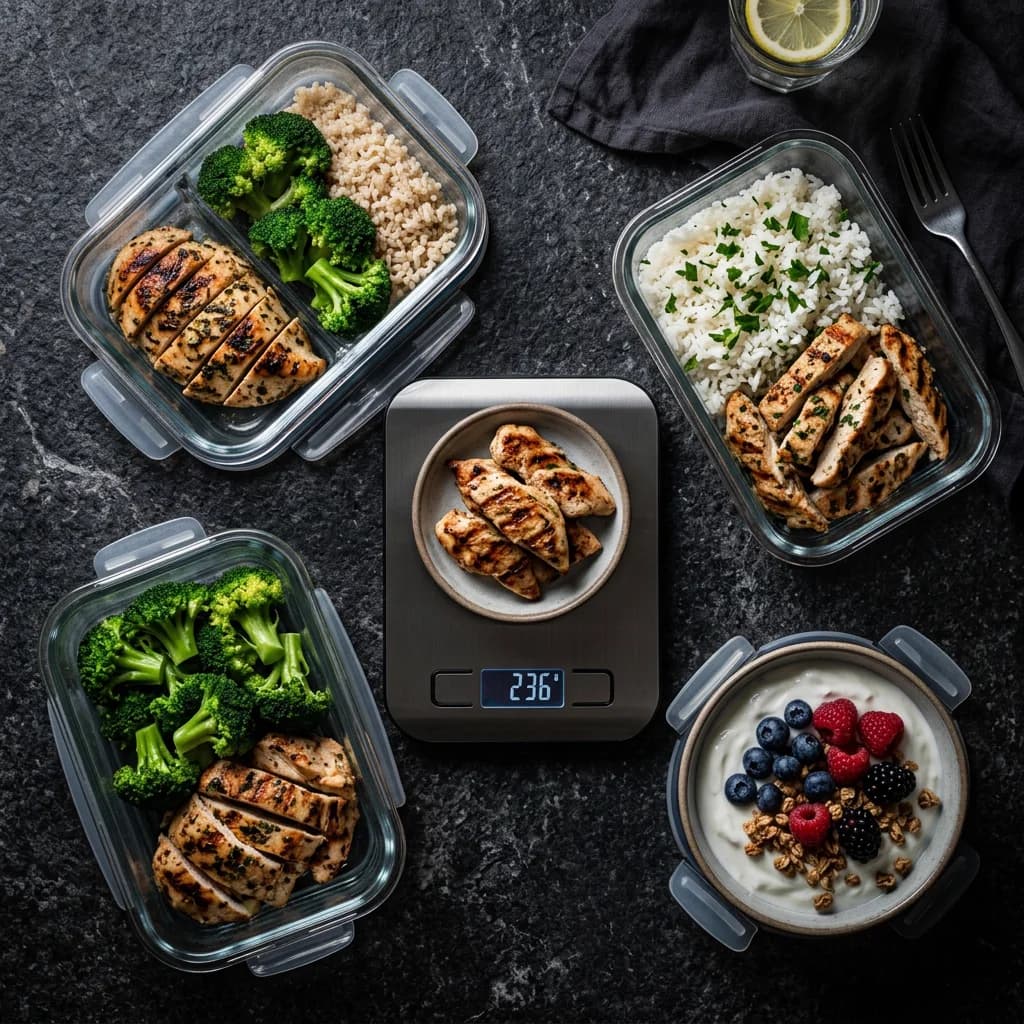
Yes, easily. Powder is a convenience product, not a requirement. Chicken, eggs, Greek yogurt, fish, lentils, and tofu will all get the job done if you hit your daily total. Powder just makes hitting that total simpler when you're busy, which for most people is the entire reason to buy it.
No. The research on this has been fairly consistent, and the concern came from early animal studies at doses no human eats. Soy protein isolate is one of the higher-quality plant options available and there's no good reason for men to avoid it for hormonal reasons.
Whenever it helps you hit your daily target. The old 30-minute anabolic window has been pretty thoroughly debunked, and total daily intake spread across three to five feedings matters far more than timing. If post-workout is when you'll reliably remember to drink it, drink it then.