calorie deficit meal plan: exactly what to eat to lose weight (with sample plans)
A calorie deficit meal plan is the single most important tool for sustainable weight loss — and the one thing most people get wrong. After coaching 500+ fat loss clients across Charleston, Mount Pleasant, Summerville, and online nationwide, I can tell you that the #1 reason people fail is not a lack of willpower. It is that they have no structured plan for what to eat in a calorie deficit. They slash calories randomly, eat too little protein, feel miserable by day four, and quit. This guide gives you the exact calorie deficit meal plans I build for real coaching clients — complete with sample days at 1500 and 1800 calories, the best calorie deficit foods, and a framework you can adapt to your own life whether you are a beginner or an experienced dieter.
How Many Calories Do You Actually Need to Lose Weight?
Before we get into specific meal plans, you need to understand how many calories to lose weight for your body. A calorie deficit means eating fewer calories than your body burns in a day. The size of that deficit determines how fast you lose fat — and whether you keep your muscle or lose it along the way.
Here is the framework I use with every coaching client:
- Step 1 — Estimate maintenance calories: Multiply your body weight (lbs) by 14-16. Sedentary individuals use 14; moderately active individuals use 15-16. A 160 lb moderately active woman would estimate maintenance at roughly 2,400 calories.
- Step 2 — Subtract 300-500 calories: This creates a sustainable deficit. That same 160 lb woman would target 1,900-2,100 calories per day.
- Step 3 — Set protein first: At 0.8-1.0g per pound of bodyweight, she needs 128-160g of protein daily. This is non-negotiable.
- Step 4 — Track for 2 weeks, then adjust: If you are not losing 0.5-1.0 lbs per week, reduce by another 100-150 calories. If you are losing faster than 1.5 lbs per week, you are likely losing muscle — add 100-200 calories back.
I covered the full science behind sustainable caloric deficits in our science-based fat loss guide — read that if you want the deep hormonal and metabolic explanation. This post is purely practical: what to eat, how much, and when.
The Best Foods to Eat in a Calorie Deficit
Not all calories are equal when you are in a deficit. The foods to eat in a calorie deficit should maximize satiety per calorie, protect your muscle mass, and give you enough energy to train and function.
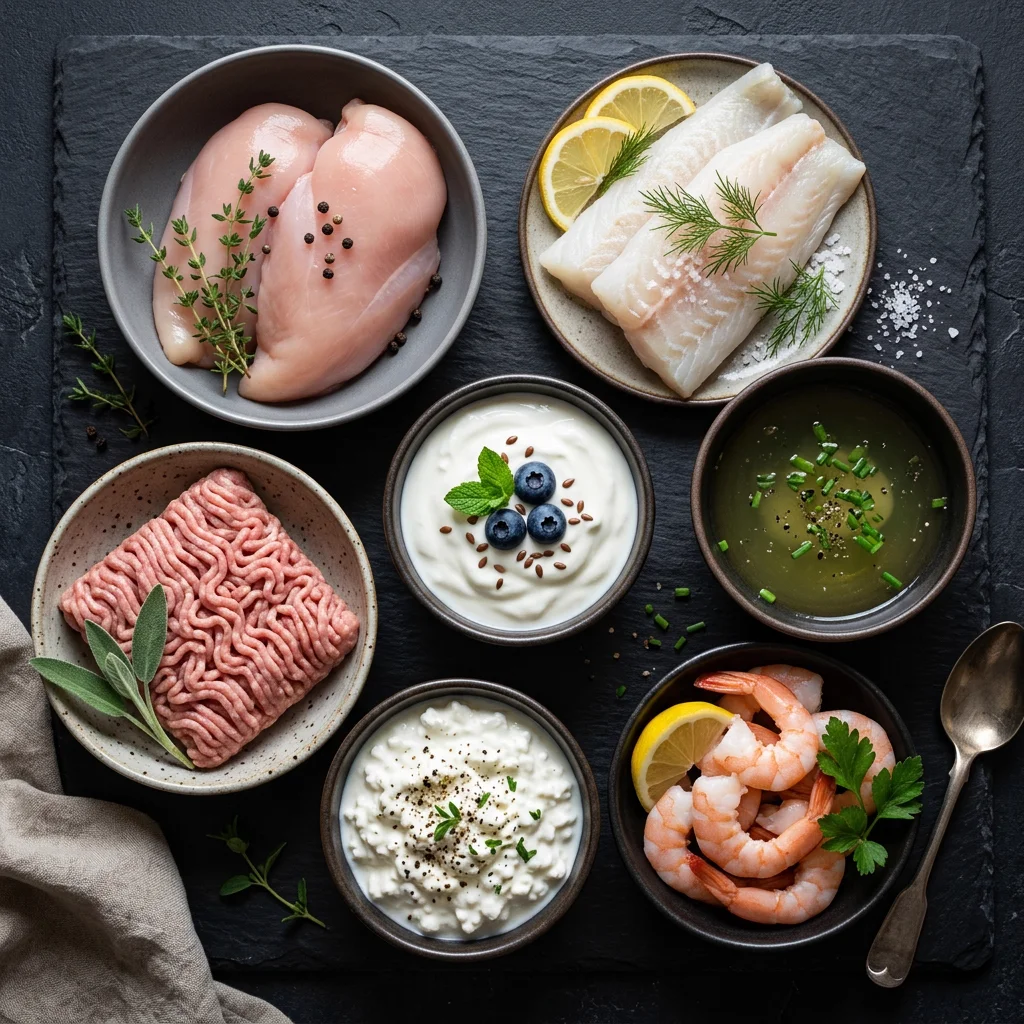
Tier 1: High Protein, Low Calorie Staples
These are the backbone of any weight loss meal plan. High protein low calorie meals keep you full, preserve lean muscle, and have the highest thermic effect — your body burns 20-30% of protein calories just digesting them.
| Food | Serving | Calories | Protein |
|---|---|---|---|
| Chicken breast | 6 oz | 165 | 31g |
| White fish (tilapia, cod) | 6 oz | 140 | 30g |
| Egg whites | 1 cup | 120 | 26g |
| 96% lean ground turkey | 6 oz | 180 | 34g |
| Nonfat Greek yogurt | 1 cup | 130 | 22g |
| Shrimp | 6 oz | 140 | 28g |
| Low-fat cottage cheese | 1 cup | 160 | 28g |
Tier 2: High Volume, Low Calorie Vegetables
These are your secret weapon for staying full. A full pound of broccoli is only 150 calories. Load your plate with these and you will never feel deprived on a calorie deficit diet.
- Cruciferous vegetables: Broccoli, cauliflower, Brussels sprouts, cabbage
- Leafy greens: Spinach, kale, arugula, romaine
- High-water vegetables: Zucchini, cucumber, bell peppers, tomatoes, mushrooms
- Fiber-rich starches: Sweet potatoes, butternut squash (measured portions)
Tier 3: Smart Carbs and Fats
Carbs fuel your training. Fats support hormonal health. Both belong in your deficit diet plan — you just need to be intentional about portions.
- Complex carbs: Oats, rice, potatoes, quinoa, whole grain bread
- Fruits: Berries, apples, bananas (great pre-workout)
- Healthy fats: Avocado (measured), olive oil (measured), almonds, natural peanut butter
For the full breakdown of how to balance these macronutrients, see our complete guide to mastering nutrition and macros.
Sample 1500 Calorie Meal Plan
This calorie deficit meal plan for women — or smaller men — targets approximately 1500 calories with 140g+ protein. A 1500 calorie meal plan works well for women weighing 130-160 lbs with a sedentary to moderately active lifestyle.
| Meal | What to Eat | Calories | Protein |
|---|---|---|---|
| Breakfast | 3 egg whites + 1 whole egg scrambled with spinach and mushrooms, 1 slice whole grain toast | 280 | 24g |
| Lunch | 5 oz grilled chicken breast over mixed greens with cucumber, tomato, 1 tbsp olive oil vinaigrette, 1/2 cup rice | 420 | 38g |
| Snack | 1 cup nonfat Greek yogurt with 1/2 cup blueberries | 170 | 23g |
| Dinner | 6 oz baked cod with roasted broccoli (2 cups) and 1 small sweet potato | 380 | 34g |
| Evening Snack | 1/2 cup low-fat cottage cheese with cinnamon | 80 | 14g |
| Daily Total | ~1,330 | ~133g |
Note: This leaves 100-170 calories of buffer for cooking oils, condiments, and slight portion variations.
Sample 1800 Calorie Meal Plan
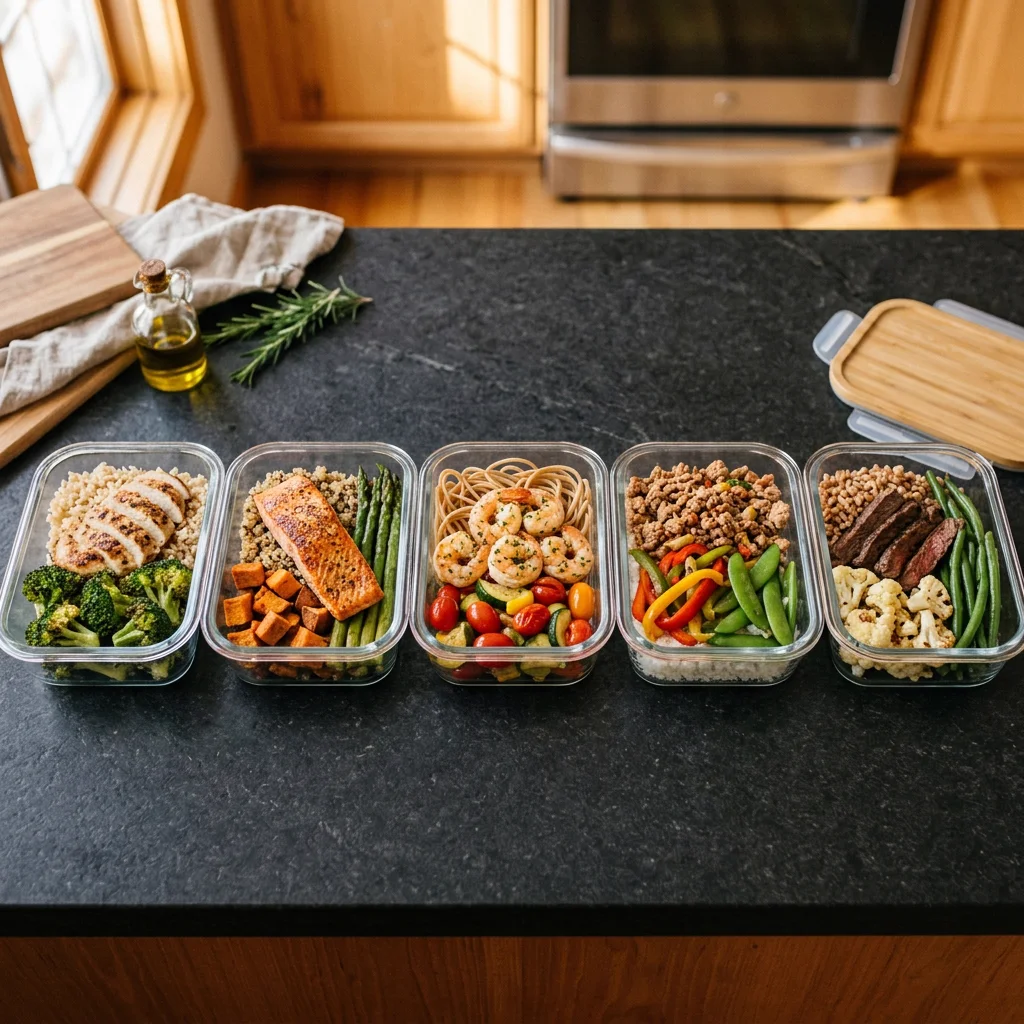
This meal plan for weight loss targets approximately 1800 calories with 160g+ protein. It works well for active women, men weighing 160-200 lbs, or anyone who found 1500 calories too restrictive. This is the calorie deficit meal plan for beginners I most commonly start clients on.
| Meal | What to Eat | Calories | Protein |
|---|---|---|---|
| Breakfast | 1/2 cup oats with 1 scoop whey protein, 1 tbsp peanut butter, 1/2 banana | 390 | 32g |
| Lunch | 6 oz grilled chicken breast, 1 cup rice, 2 cups roasted mixed vegetables, 1 tsp olive oil | 520 | 42g |
| Snack | 1 cup nonfat Greek yogurt, 1/4 cup granola, 1/2 cup strawberries | 240 | 24g |
| Dinner | 6 oz 96% lean ground turkey over 2 cups cauliflower rice with diced peppers, onions, and low-sodium soy sauce | 310 | 36g |
| Evening Snack | 2 rice cakes with 1 tbsp almond butter and 1/2 cup cottage cheese | 220 | 18g |
| Daily Total | ~1,680 | ~152g |
Buffer of ~120 calories for cooking oils, sauces, and portion variation.
How to Build Your Own Calorie Deficit Meal Plan
The sample plans above are templates. The best calorie deficit meal plan is one you can actually follow consistently. Here is the five-step framework I use with every coaching client:
Step 1: Set Your Calorie Target
Use the calculation from earlier in this article. If you are unsure, start at bodyweight (lbs) x 13 — this places most people in a moderate deficit immediately.
Step 2: Lock In Protein
Set protein at 0.8-1.0g per pound of bodyweight. This is your single most important macro. Every meal should include a protein source. Our body recomposition guide explains how protein preserves muscle during fat loss.
Step 3: Fill Half Your Plate with Vegetables
At every lunch and dinner, at least half your plate should be non-starchy vegetables. This is the simplest way to stay full on fewer calories without counting every gram.
Step 4: Add Smart Carbs Around Training
Place the majority of your starchy carbs (rice, oats, potatoes, fruit) in the meals before and after your workouts. This fuels performance and recovery while minimizing fat storage.
Step 5: Use Strategic Fats Sparingly
Fats are essential for hormonal health — especially for women — but at 9 calories per gram, they add up fast. Measure oils, nut butters, and avocado rather than eyeballing them. Most people underestimate fat calories by 30-50%.
Common Mistakes That Destroy Your Calorie Deficit
- Drinking your calories: Specialty coffee drinks, juice, alcohol, and smoothies can add 300-800 invisible calories per day. Stick to water, black coffee, and unsweetened tea.
- Skipping protein at breakfast: Starting the day with only carbs sets off a blood sugar spike and crash cycle that drives hunger all day. Every meal needs 20g+ protein.
- Not tracking for at least 2 weeks: Most people underestimate their intake by 30-40% until they spend two weeks accurately measuring portions.
- Weekend blowouts: Five days in a 500-calorie deficit can be wiped out by a single Saturday of eating out and drinking.
- Cutting too aggressively: Going below BMR tanks your metabolism, shreds muscle, and guarantees a rebound. Read our sustainable shred guide for how to diet without metabolic damage.
- Ignoring training: A calorie deficit without resistance training means you lose muscle alongside fat. Our guide on the best exercises for fat loss shows you exactly what to pair with your nutrition plan.
What to Eat to Lose Weight: The Grocery List
Here is the exact grocery list I send to new coaching clients. These are the best foods for a calorie deficit — high satiety per calorie, easy to prep, and widely available.

Proteins
- Chicken breast (boneless, skinless)
- 96% lean ground turkey
- White fish (cod, tilapia, mahi-mahi)
- Shrimp
- Egg whites + whole eggs
- Nonfat Greek yogurt
- Low-fat cottage cheese
- Whey protein powder
Vegetables
- Broccoli, cauliflower, Brussels sprouts
- Spinach, mixed greens, kale
- Zucchini, bell peppers, mushrooms
- Onions, garlic, tomatoes
- Cucumber, celery
Carbs
- Oats (rolled or steel-cut)
- White or brown rice
- Sweet potatoes
- Whole grain bread
- Berries, bananas, apples
- Rice cakes
Fats
- Extra virgin olive oil
- Natural peanut or almond butter
- Avocado
- Almonds (pre-portioned)
How Long Should You Stay in a Calorie Deficit?
Most people should not stay in a continuous deficit for more than 12-16 weeks. After that, metabolic adaptation becomes significant — your body reduces NEAT, thyroid output decreases, and hunger hormones spike. At that point, I transition clients to a maintenance phase for 4-6 weeks before starting another deficit phase if needed.
"The plan is never the problem. Execution is the problem. Adjustments are the problem. Accountability is the problem." — Kyle Belk, NASM-CPT
GET YOUR CUSTOM CALORIE DEFICIT MEAL PLAN
Stop guessing what to eat. Get a personalized calorie deficit meal plan built for your body, your schedule, and your food preferences — with weekly adjustments based on your real progress data. In-person coaching in Charleston, SC and online coaching available nationwide.
Apply for Coaching →Questions &
Answers
If your question isn't answered here, reach out directly — Kyle responds personally.
A calorie deficit meal plan is a structured eating plan where your total daily calorie intake is 300-500 calories below your maintenance level. It prioritizes high protein foods, vegetables, and complex carbs to keep you full while creating the energy gap needed for your body to burn stored fat.
Focus on lean proteins like chicken breast, white fish, egg whites, and Greek yogurt at every meal. Fill half your plate with non-starchy vegetables. Add measured portions of complex carbs around your workouts and small amounts of healthy fats. Avoid liquid calories and heavily processed foods.
Multiply your body weight in pounds by 14-16 to find your approximate maintenance calories, then subtract 300-500. Track for two weeks and adjust: if you are not losing 0.5-1.0 lbs per week, reduce by another 100-150 calories.
A balanced 1500 calorie meal plan includes 4-5 meals per day with 130-150g of protein. A typical day: egg whites with vegetables and toast for breakfast, grilled chicken salad with rice for lunch, Greek yogurt snack, baked fish with vegetables for dinner, and cottage cheese before bed.
The principles are the same but women generally have lower calorie needs, so a calorie deficit meal plan for women typically ranges from 1,400-1,800 calories. Women should also avoid cutting too aggressively as this can disrupt hormonal function. Protein targets remain the same: 0.8-1.0g per pound of bodyweight.
Egg white scrambles with vegetables (280 cal, 24g protein), grilled chicken over salad (350 cal, 38g protein), Greek yogurt with berries (170 cal, 23g protein), baked white fish with roasted vegetables (300 cal, 30g protein), and ground turkey stir-fry over cauliflower rice (310 cal, 36g protein).
Most people should follow a continuous calorie deficit for 12-16 weeks maximum. After that, transition to maintenance calories for 4-6 weeks to restore hormonal balance and metabolic rate before starting another deficit phase if needed.
Yes, but count for at least 2 weeks first to calibrate your portions. After that, use the plate method: half vegetables, one quarter lean protein, one quarter complex carbs. This naturally creates a moderate deficit for most people.
Avoid calorie-dense, low-satiety foods: sugary drinks, alcohol, fried foods, creamy sauces, processed snacks, candy, pastries, and large portions of nuts or cheese. A single restaurant meal can contain 1,500-2,500 calories.
You do not need a trainer to follow these sample plans. However, a qualified coach provides personalized adjustments every 2-4 weeks based on your progress data, accountability, and intelligent phase management — which is why coached clients typically reach their goals 30-50% faster.