synergistic peptide blends: what klow and glow research actually shows
Evidence review — last updated July 2026. All content is provided for laboratory and educational purposes only. The compounds discussed are research chemicals intended for in vitro and preclinical investigational use. Nothing here is medical advice.
Combination products dominate the research-peptide market. Two of them — marketed as KLOW and GLOW — appear in more supplier catalogues than almost any single compound, and both are sold on an implicit premise: that combining regenerative peptides produces an effect greater than the sum of the parts.
That premise deserves scrutiny rather than repetition. The individual compounds in these blends have real, substantial literatures. GHK-Cu has been studied since 1973. BPC-157 has generated well over a hundred preclinical papers. The tripeptide KPV has a credible mechanistic basis in mucosal inflammation. The question this article addresses is narrower and more important: does combining them produce synergy, and has anyone actually measured it?
The short answer is that no published study has formally tested either blend using the analytical methods pharmacology uses to establish synergy. That does not make the blends worthless. It does mean “synergistic” is currently a hypothesis borrowed from mechanism, not a finding derived from data — and researchers designing studies around these materials should know which one they’re working with.
Quick Answer
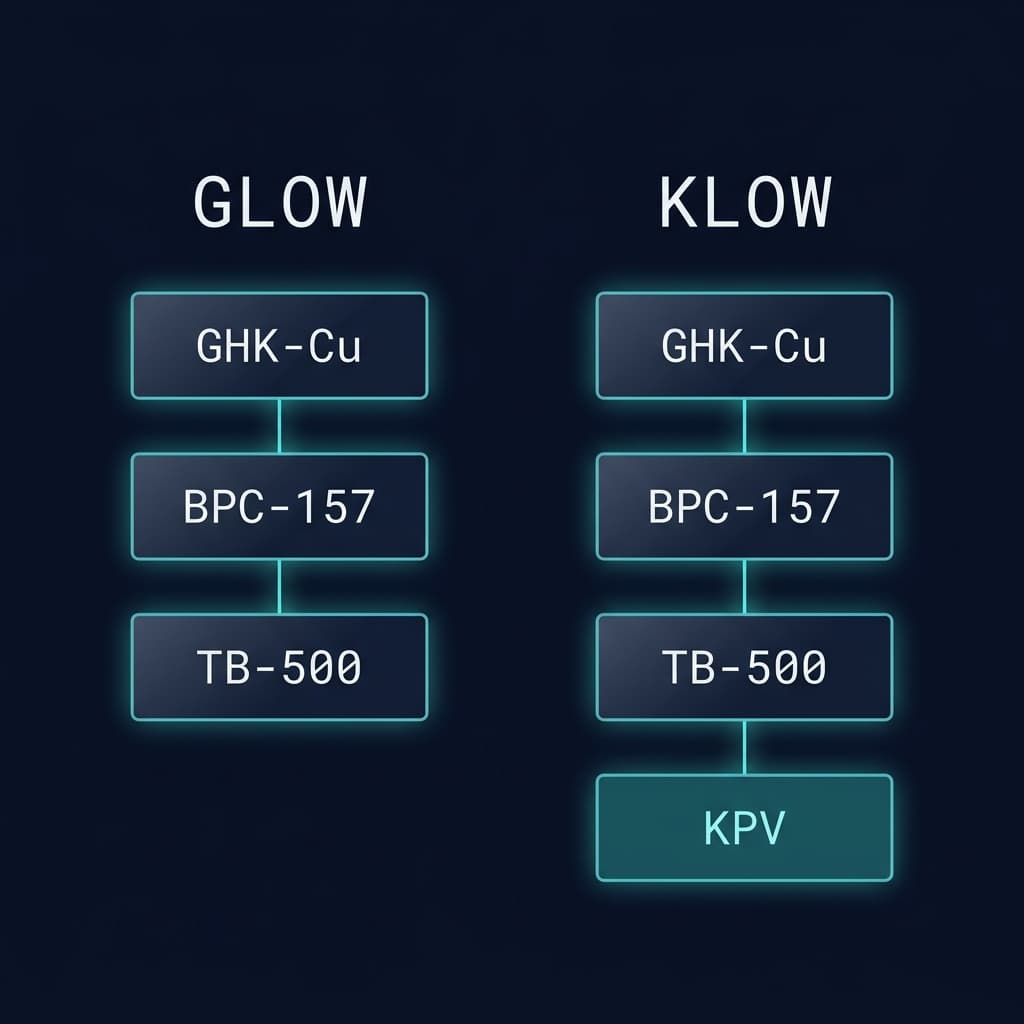
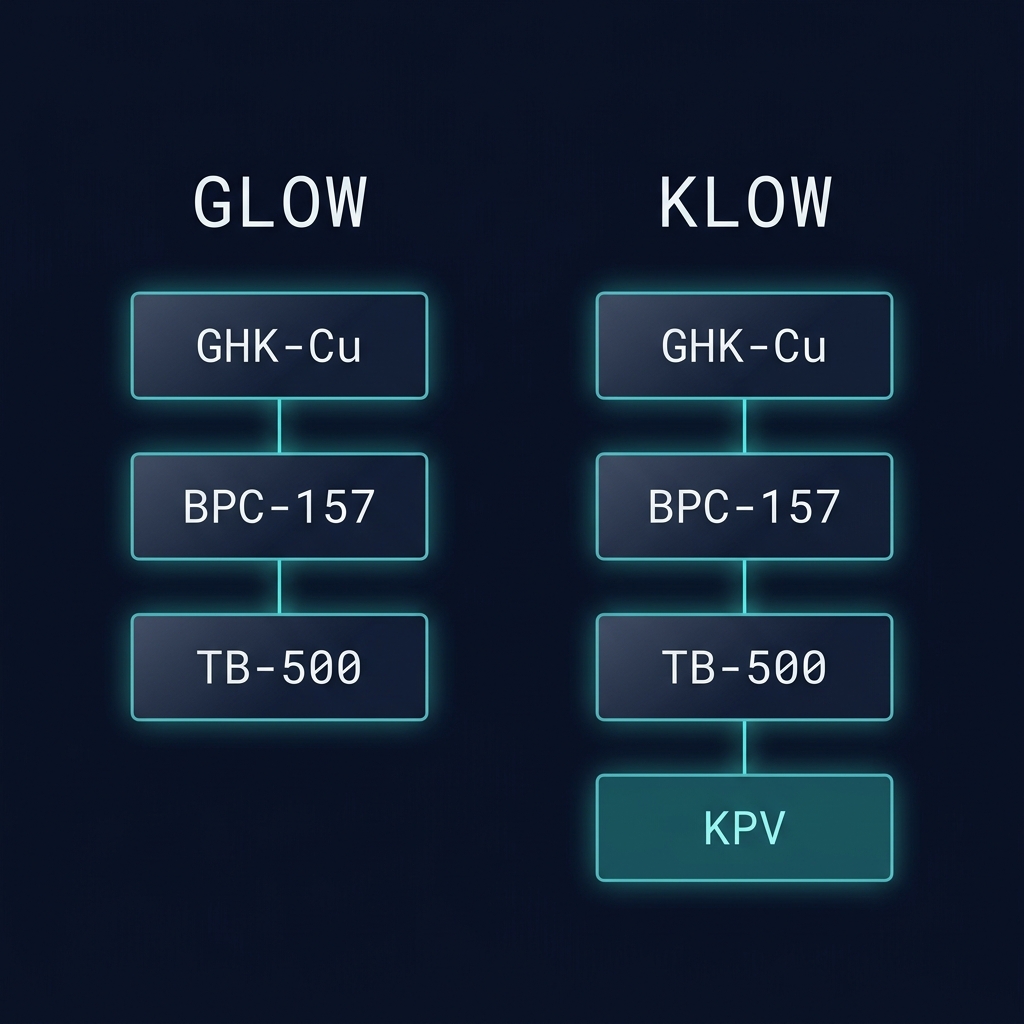
What are synergistic peptide blends? Synergistic peptide blends are fixed-ratio combinations of two or more research peptides sold as a single lyophilised preparation, formulated on the rationale that their mechanisms complement one another. The two most common are GLOW (typically GHK-Cu, BPC-157 and TB-500) and KLOW (the same three plus KPV).
The word synergistic is used descriptively in the market, not analytically. In pharmacology, synergy has a formal definition — a combined effect exceeding what additivity models predict — and demonstrating it requires isobolographic or combination-index analysis across a dose matrix. No such analysis has been published for either blend.
Key Takeaways
- KLOW is GLOW plus KPV. GLOW is generally a three-peptide blend (GHK-Cu, BPC-157, TB-500); KLOW adds the anti-inflammatory tripeptide KPV. Neither name is a standardised formulation — ratios vary between suppliers.
- “Synergistic” has a technical meaning that is not being met. Synergy requires demonstration against an additivity model (Loewe, Bliss, or Chou-Talalay). Mechanistic complementarity is a reason to hypothesise synergy, not evidence of it.
- The four components sit at different evidence grades. GHK-Cu has decades of in vitro and topical human data. BPC-157 has extensive rodent data concentrated in one research group. TB-500 is a fragment of thymosin β4 and inherits far less of that peptide’s evidence than marketing implies. KPV has solid mechanistic work in colitis models.
- TB-500 is not thymosin β4. This is the single most common factual error in blend marketing. TB-500 is a short actin-binding fragment; thymosin β4 is a 43-residue endogenous protein with its own clinical trial history.
- The regulatory ground moved in July 2026. An FDA advisory committee narrowly recommended BPC-157, TB-500 and KPV for the 503A Bulks List — against the recommendation of FDA’s own reviewers. The vote is non-binding and changes nothing yet.
- Blend format introduces analytical problems. Verifying identity and purity of four peptides in one vial is harder than verifying one, and a certificate of analysis for a blend should be read differently from a single-compound COA.
1. Definitions: Blends, Stacks and Fixed-Ratio Combinations
Three terms circulate interchangeably and shouldn’t.
Peptide blend — Two or more peptides lyophilised together in a single vial at a ratio fixed by the manufacturer. The researcher cannot vary the ratio.
Peptide stack — Two or more peptides supplied and handled separately, combined at the point of use. The ratio is variable and controlled by the researcher.
Fixed-ratio combination — The formal pharmacological term for a blend. Fixed-ratio products are regulated and studied differently from separately administered agents precisely because the ratio becomes a property of the product rather than a variable of the experiment.
That last distinction carries real methodological weight. A blend removes a degree of freedom from any study built on it. If a researcher observes an effect using GLOW, they cannot attribute it to any one component, cannot construct a dose-response for the components independently, and cannot compare their ratio to anyone else’s — because the ratio is proprietary and often undisclosed.
This is not an argument against blends. It is an argument for knowing what a blend costs you experimentally before you design around one.
2. What KLOW and GLOW Actually Contain
| GLOW | KLOW | |
|---|---|---|
| GHK-Cu | Yes | Yes |
| BPC-157 | Yes | Yes |
| TB-500 | Yes | Yes |
| KPV | No | Yes |
| Component count | 3 | 4 |
| Marketed emphasis | Dermal, collagen, cosmetic-adjacent | All above plus inflammatory and mucosal research |
The standardisation problem
Neither name is a protected designation, a compendial standard, or a formulation registered with any body. “GLOW” from two suppliers may differ in the mass of each component, the total peptide load per vial, the counterion form (acetate versus trifluoroacetate salt), and the presence and identity of bulking agents such as mannitol.
This has a direct consequence that researchers frequently miss: results obtained with one supplier’s GLOW are not straightforwardly comparable to results obtained with another’s. Any protocol referencing these materials should record supplier, lot number, stated composition and total peptide mass, not simply the trade name.
Research note: When a blend’s per-component masses are not disclosed, the practical floor for rigour is to request the lot-specific certificate of analysis and record the stated ratio from it. If the supplier cannot provide per-component quantitation, the material is unsuitable for any study intended for publication.
KLOW vs. GLOW: Which Should You Choose?
Quick Answer
KLOW and GLOW are not competing products aimed at different goals — KLOW is GLOW’s three-peptide base (GHK-Cu, BPC-157, TB-500) with KPV added on top. The real question is not “which is better,” it’s whether your protocol has a reason to include KPV’s mucosal anti-inflammatory mechanism alongside the other three. If it doesn’t, GLOW is the simpler three-variable model. If it does, KLOW adds that fourth variable — at the cost of a harder-to-interpret combination.
| Consideration | GLOW | KLOW |
|---|---|---|
| Components | GHK-Cu, BPC-157, TB-500 (3) | GHK-Cu, BPC-157, TB-500, KPV (4) |
| Added mechanism | — | KPV: anti-inflammatory activity concentrated in mucosal/gut tissue models |
| Variables to control for | 3 independent compounds | 4 independent compounds — harder to attribute an observed effect to one agent |
| Typical marketing framing | Dermal / cosmetic-adjacent research | Above, plus gut and inflammatory research |
| Evidence for the combined blend itself | None published (Section 5) | None published (Section 5) |
| Better fit when… | The protocol isolates GHK-Cu / BPC-157 / TB-500 mechanisms only | The protocol specifically investigates KPV alongside the other three |
Because neither blend has been tested as a combined formulation (Section 5), choosing between them isn’t a matter of picking the more effective product — no comparative data exists to make that call. It’s a matter of picking the simpler experimental model that matches your research question. Every additional component in a fixed-ratio blend is one more variable a study design has to account for; adding KPV without a specific reason to study it just adds noise to the interpretation.
Whichever name a supplier uses — and, per the standardisation problem above, the same trade name can mean different things between suppliers — the verification standard in Section 8 applies without exception: request the lot-specific certificate of analysis and confirm per-component identity and quantity before treating any named blend as equivalent to another supplier’s product carrying the same label.
3. The Four Components, Individually
Each section below states what the compound is, what the mechanism literature supports, and — explicitly — what grade of evidence that support rests on. Evidence grades used:
- Grade A — Randomised controlled human trials
- Grade B — Non-randomised human data or controlled clinical observation
- Grade C — Animal models, multiple independent laboratories
- Grade D — Animal models, single laboratory, or in vitro only
- Grade E — Mechanistic inference, computational, or extrapolated
3.1 GHK-Cu (Glycyl-L-Histidyl-L-Lysine Copper Complex)
What it is. A naturally occurring tripeptide first isolated from human plasma by Loren Pickart in 1973. It binds copper(II) with high affinity, and the copper complex — not the bare peptide — is the biologically active species. Plasma concentrations decline substantially with age, which forms the basis of most regenerative hypotheses about it.
Mechanistic support. In cultured fibroblasts, GHK-Cu increases synthesis of collagen I and III and of glycosaminoglycans, and modulates the balance of matrix metalloproteinases against their tissue inhibitors (TIMP-1, TIMP-2). It has documented antioxidant behaviour and has been shown to influence expression of genes associated with tissue remodelling. Rodent and rabbit wound models show accelerated closure with topical application.
Where the evidence actually sits. Topical and cosmetic application in humans is the best-supported use, with controlled dermatological studies showing measurable effects on skin parameters — Grade B. The widely circulated claim that GHK-Cu “resets” a large fraction of the human genome traces to transcriptomic database analysis rather than experimental confirmation, and should be cited as Grade E. Systemic parenteral administration in humans is essentially unstudied.
The copper caveat. GHK-Cu delivers copper. Copper homeostasis is tightly regulated, and the toxicological literature on copper loading is separate from and older than the peptide literature. Any study design involving repeated GHK-Cu exposure should account for cumulative copper.
3.2 BPC-157 (Body Protection Compound-157)
What it is. A synthetic pentadecapeptide — fifteen amino acids — corresponding to a partial sequence of a protein identified in human gastric juice. It is not itself an endogenous human peptide; it is a designed fragment.
Mechanistic support. The proposed mechanisms are angiogenic and cytoprotective. The most developed account involves upregulation of VEGFR2 and downstream signalling through the VEGFR2–Akt–eNOS axis. Work in tendon fibroblasts describes effects on FAK–paxillin signalling and cell migration. Gastrointestinal models report protection against NSAID-induced and ethanol-induced mucosal injury.
Where the evidence actually sits. The preclinical volume is genuinely large — well over a hundred rodent studies spanning tendon, ligament, muscle, gut, and neural models. The critical qualifier is that the overwhelming majority originates from a single research group at the University of Zagreb led by Predrag Sikirić. That is not an allegation of impropriety; it is a structural feature of the evidence base. Findings that have not been independently replicated across laboratories carry less inferential weight than the raw paper count suggests. This places most BPC-157 evidence at Grade D rather than Grade C. For a deeper comparison of BPC-157 and TB-500 in the context of tissue repair, see our dedicated article.
3.3 TB-500
What it is — and what it is not. TB-500 is a synthetic peptide corresponding to the actin-binding domain of thymosin β4, commonly the seven-residue sequence LKKTETQ. Thymosin β4 is a 43-residue endogenous protein. They are not the same molecule, and TB-500 does not inherit thymosin β4’s evidence base.
This distinction is not pedantic. Thymosin β4 has been through genuine clinical development — RegeneRx Biopharmaceuticals ran human trials in dry eye disease, epidermolysis bullosa and venous stasis ulcers, with mixed results. That trial history is routinely cited in marketing for TB-500, which was not the investigational agent in any of it.
Anti-doping status. Thymosin β4 and its analogues fall under the WADA Prohibited List. Any research context involving competitive athletes must account for this.
3.4 KPV (Lysine-Proline-Valine)
What it is. The C-terminal tripeptide of α-melanocyte-stimulating hormone — residues 11 to 13 of α-MSH.
Mechanistic support. KPV is the best-characterised anti-inflammatory element of the four, with a coherent and independently investigated mechanism. It inhibits nuclear translocation of NF-κB and reduces pro-inflammatory cytokine output. Uptake into intestinal epithelial and immune cells appears to be mediated substantially by the PepT1 oligopeptide transporter, which gives it genuine tissue selectivity for gut mucosa. Efficacy has been shown in chemically induced murine colitis models (DSS and TNBS).
A useful property. Unlike full-length α-MSH, KPV retains anti-inflammatory activity without the melanocortin-receptor-mediated pigmentary effects. This is a real pharmacological distinction and one of the more interesting features of the peptide.
Where the evidence actually sits. Grade C for anti-inflammatory activity in rodent colitis — multiple laboratories, consistent direction of effect. Human data is absent.
Evidence Summary
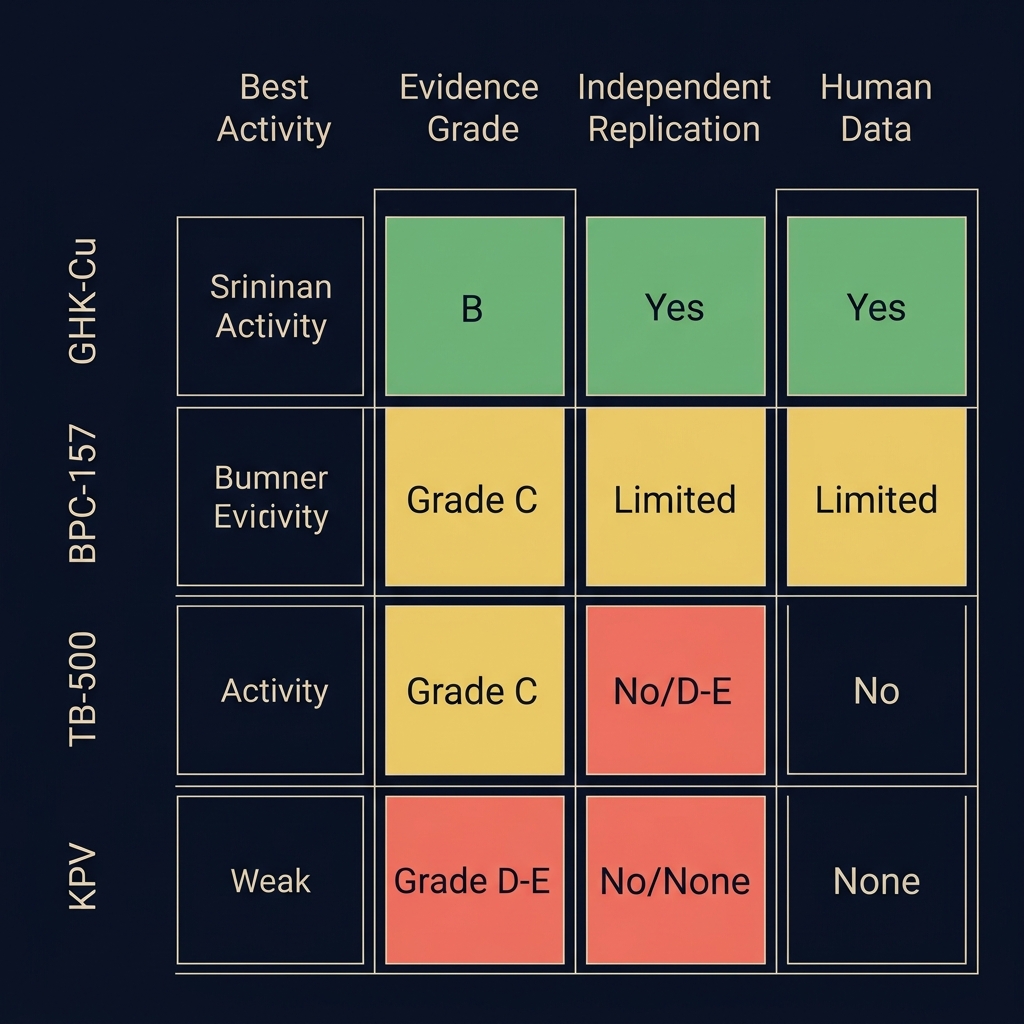
| Component | Best-supported activity | Strongest evidence | Independent replication | Human data |
|---|---|---|---|---|
| GHK-Cu | Collagen/ECM modulation, wound repair | B (topical) | Yes | Topical, controlled |
| BPC-157 | Angiogenesis, soft-tissue and GI repair | D | Limited | Minimal, low quality |
| TB-500 | Actin binding, cell migration | D–E | Limited (fragment) | None |
| KPV | NF-κB inhibition, mucosal anti-inflammation | C | Yes | None |
4. What “Synergy” Means — and Why the Distinction Matters
This is the section the market skips.
Additive is not synergistic
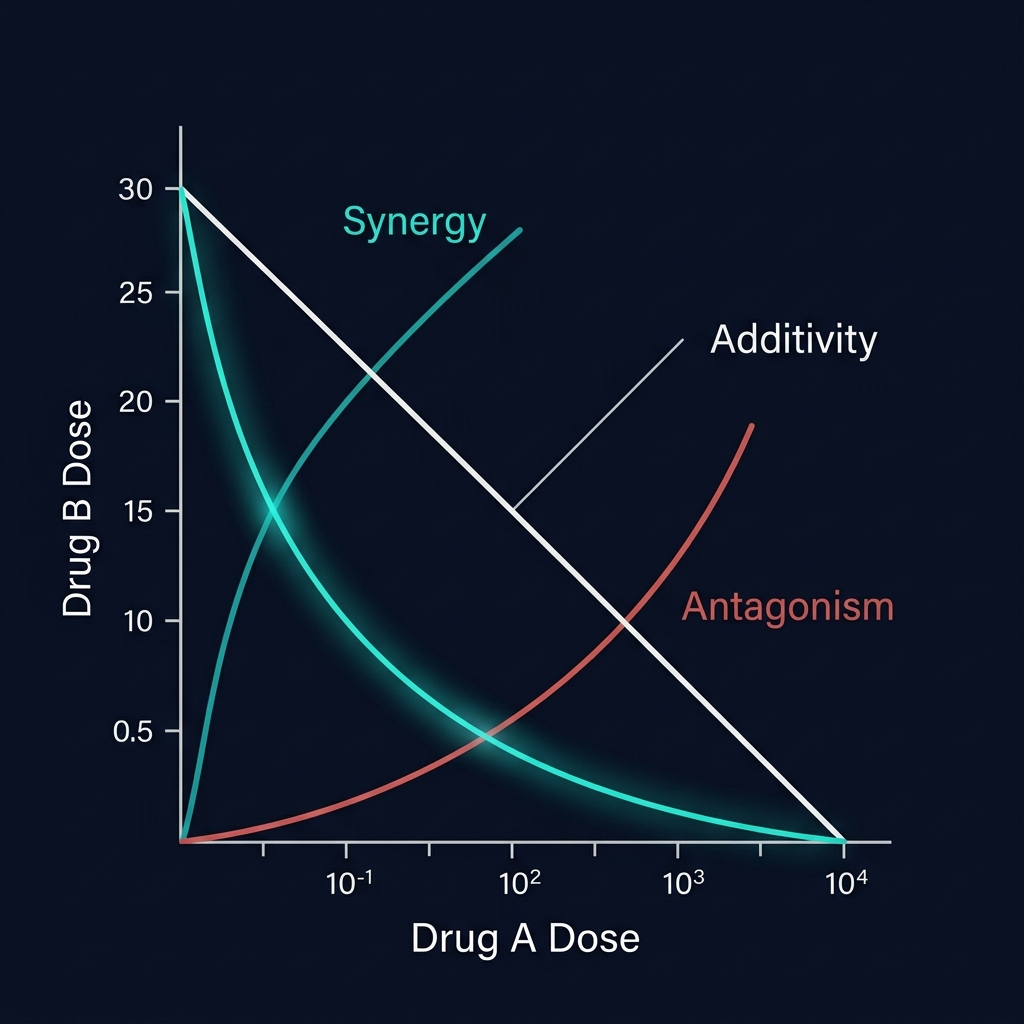
If two compounds each produce an effect and the combination produces roughly the sum of those effects, that is additivity. It is unremarkable, and it is what you should expect by default from two agents acting on related pathways. Synergy means the combination exceeds what an additivity model predicts. Antagonism means it falls short — and antagonism is a real possibility in combinations, not a theoretical one.
Almost every claim of “synergy” in blend marketing describes, at best, mechanistic complementarity: compound A affects angiogenesis, compound B affects cell migration, therefore together they should do more. That reasoning generates a hypothesis. It does not test one.
How synergy is formally established
Pharmacology has settled methods for this, and they share a requirement: you must characterise the dose-response of each agent alone, then of the combination across a matrix of ratios.
| Method | What it does | Requirement |
|---|---|---|
| Loewe additivity / isobologram | Plots dose pairs producing equal effect; a curve bowing toward the origin indicates synergy | Full dose-response curves for both agents alone |
| Bliss independence | Compares observed combined effect to that predicted from independent probabilistic action | Suitable for agents with distinct mechanisms |
| Chou-Talalay combination index (CI) | CI < 1 synergy, = 1 additive, > 1 antagonism | Median-effect analysis across a fixed-ratio dose series |
Expert insight: Ask of any blend claiming synergy: at what ratio, for what endpoint, against which additivity model? Synergy is not a property of a mixture. It is a property of a specific ratio producing a specific effect measured against a specific null model. A product that claims synergy without naming a ratio and an endpoint has not made a scientific claim.
The state of play for KLOW and GLOW
No isobolographic analysis, Bliss calculation or combination-index study has been published for either blend, at any ratio, for any endpoint. Searches of the peer-reviewed literature on PubMed return work on the individual components and a small amount of co-administration work on one pairing — nothing that formally evaluates the three- or four-component combinations.
The pathway-overlap problem
Complementarity arguments assume the mechanisms are independent. Several here are not. GHK-Cu, BPC-157 and TB-500 all have proposed angiogenic activity, and BPC-157 and KPV both converge on inflammatory signalling. Where two agents act on the same node, the marginal contribution of the second is often much smaller than mechanism diagrams imply — the pathway saturates. Overlapping mechanisms are as likely to produce diminishing returns as amplification, and only measurement distinguishes the two.
5. Combination Evidence: What Has Actually Been Co-Administered
BPC-157 with TB-500
This is the only pairing in either blend with meaningful co-administration literature, and it is the natural focus for anyone evaluating the blends’ central premise. The rationale is mechanistically tidy: BPC-157’s proposed angiogenic activity paired with thymosin β4’s actin-mediated effects on cell migration addresses two requirements of tissue repair that are genuinely distinct. For a comprehensive analysis of BPC-157 and TB-500 co-administration research, see our dedicated comparison article.
The available work is preclinical and largely descriptive of combined outcomes rather than analytical of interaction. Studies reporting improved outcomes with both agents relative to either alone are consistent with additivity; without a dose matrix, they cannot distinguish additivity from synergy.
GHK-Cu with the others
No published co-administration studies. The rationale is inferential: GHK-Cu supplies matrix and collagen effects that the others do not. Reasonable, untested.
KPV as the fourth component
No published co-administration studies with the GLOW three. KPV’s tissue selectivity via PepT1 means its distribution profile differs meaningfully from the others, which is an argument for genuine non-redundancy — and an equally good argument that its contribution in a systemic blend may not resemble its contribution in the mucosal models where it was characterised.
What this means for study design
If you are designing research around these materials and the question of interest is whether combination adds anything, a blend is the wrong tool. Fixed ratios cannot answer interaction questions. Separately sourced components allow a proper dose matrix and are the only route to a defensible synergy claim.
6. Regulatory Status as of Mid-2026
The July 2026 advisory committee vote
FDA’s Pharmacy Compounding Advisory Committee met on 23–24 July 2026 to consider seven peptides for the Section 503A Bulk Drug Substances List. BPC-157, KPV and TB-500 each received a favourable recommendation by a vote of 8 to 6, with one abstention.
Three things about that vote deserve emphasis:
- It went against FDA’s own scientists. In briefing materials published ahead of the meeting, FDA career reviewers recommended against adding any of the seven substances, citing insufficient safety and effectiveness data.
- It is not binding. PCAC advises; it does not decide. FDA makes the final determination through formal rulemaking, a process that typically runs six to twelve months.
- It changes nothing today. No legal status has shifted. The public docket is FDA-2025-N-6895.
Research-use-only status
All four compounds remain unapproved for human therapeutic use in the United States. Materials sold for research are supplied on a research-use-only basis and are not manufactured, tested or labelled to pharmaceutical standards. Nothing in the 2026 proceedings alters that.
A note on reading the news cycle: Coverage of the July vote has been widely reframed as approval. It was not approval, and it was not even a recommendation from the agency’s scientific staff — it was a narrow committee vote against staff advice. Researchers should track the rulemaking docket rather than the headlines.
7. Material Stability and Handling Considerations
The following addresses the blends as laboratory materials — storage, degradation and chain of custody. For a complete guide to peptide storage, reconstitution and cold chain management, see our reconstitution guide.
Multi-component degradation
A blend is not four independent stability profiles running in parallel — it is one system. Several factors specific to combination format:
- Divergent optimal conditions. The pH and temperature that best preserve one component may not suit another. A blend’s storage recommendation is a compromise.
- Oxidation-sensitive residues. Histidine and methionine are oxidation-prone. GHK-Cu contains histidine, and it also contains copper — a redox-active metal. Copper-catalysed oxidation of other components in the same vial is a mechanistically plausible interaction that has not been characterised for these blends.
- Aggregation. Peptides in mixed solution can interact in ways that promote aggregation, which is generally irreversible and not visible at the concentrations involved.
Research note: The copper redox point is worth taking seriously. It is a reason to prefer freshly prepared material over stored solutions in any copper-containing blend, and a reason that stability data generated on single compounds should not be assumed to transfer to blends.
Freeze-thaw and cold chain
Repeated freeze-thaw cycling is a well-documented degradation pathway for peptides in solution. Where material must be held in solution, aliquoting to single-use volumes at the point of preparation avoids cycling the bulk. Shipping excursions are a frequently overlooked variable.
8. Verifying a Blend: Purity, Identity and Reading a COA
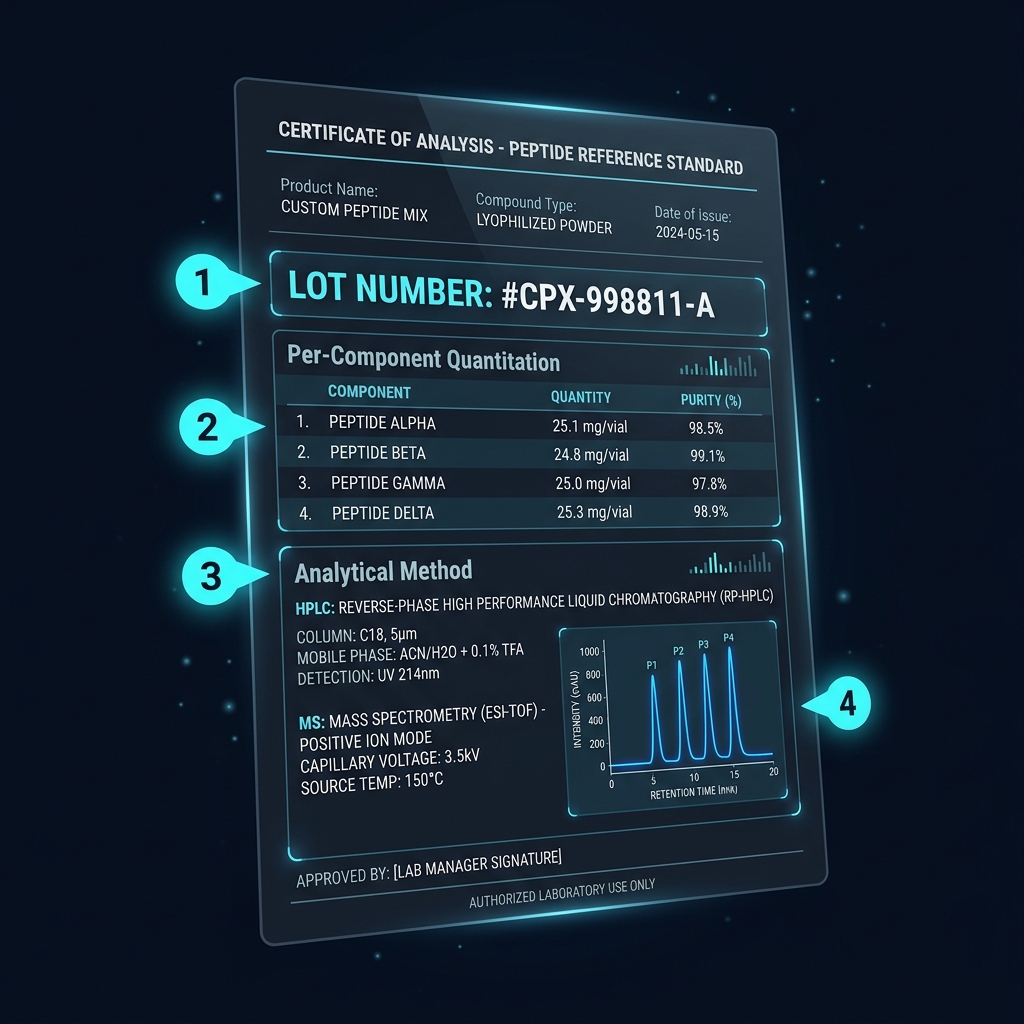
Analytical verification is harder for blends than for single compounds, and certificates of analysis for blends are correspondingly easier to misread.
The core methods
| Method | What it establishes | Limitation |
|---|---|---|
| RP-HPLC | Chromatographic purity | Co-eluting impurities invisible; no identity info |
| Mass spectrometry | Molecular identity by mass | Confirms mass, not sequence |
| Amino acid analysis | Composition | Does not establish sequence order |
| Sequencing (Edman/MS-MS) | Actual sequence | Rarely provided commercially |
Where blend COAs mislead
A single purity figure is not meaningful for a four-component product. “99% pure” on a blend COA is ambiguous: it may mean the sum of the four target peaks is 99% of total area, which tells you nothing about whether the ratio matches the label.
What a genuinely useful blend COA contains:
- Per-component quantitation, not a single aggregate figure
- Lot-specific data, with the lot number matching the vial
- Named analytical methods and conditions
- The actual chromatogram, not a summary table
- Identity confirmation by an orthogonal method — HPLC and MS together
For laboratories seeking third-party tested research peptides with transparent per-component documentation, 99 Purity Peptides provides lot-specific certificates of analysis with full chromatographic data.
9. Common Misconceptions
- “TB-500 is thymosin β4.” It is a fragment of it. Clinical trial history belonging to thymosin β4 does not transfer to TB-500.
- “Blends are more effective because the peptides work together.” This states the hypothesis as though it were the finding. Complementary mechanisms make combination reasonable to investigate; they do not demonstrate benefit.
- “Synergistic means stronger.” Synergistic has a specific meaning relative to an additivity model. Most claimed synergy, where measured at all, turns out to be additivity.
- “BPC-157 has over a hundred studies, so the evidence is strong.” Volume and independence are different properties. Concentration of a literature in one group means replication has not been the mechanism generating that volume.
- “The FDA approved these peptides in July 2026.” It did not. A non-binding advisory committee narrowly recommended three of them for a compounding list, against FDA staff advice. Rulemaking has not concluded.
- “GHK-Cu regulates thousands of genes.” This derives from transcriptomic database analysis rather than experimental validation.
- “Research-grade means high quality.” Research use only is a regulatory designation describing what a material may not be used for. It is not a quality standard.
10. Frequently Asked Questions
11. Editorial Scope and Methodology
Scope. This article addresses peptide blends as subjects of laboratory research and as laboratory materials. It deliberately excludes preparation for administration, dose determination, administration scheduling, and management of administration-related effects.
Evidence handling. Claims are graded A–E as described in Section 3. Where a claim rests on mechanistic inference rather than measured outcome, this is stated. Where a literature is concentrated in a single research group, this is stated. Absence of evidence is reported as absence of evidence rather than omitted.
Last reviewed. July 28, 2026 · Next scheduled review. October 28, 2026
Further Reading
Continue Reading
External References
| Source | Use |
|---|---|
| PubMed / NCBI | Primary literature for all four components |
| FDA Docket FDA-2025-N-6895 | 2026 PCAC proceedings and briefing materials |
| WADA Prohibited List | Anti-doping status of thymosin β4 |
| NIH ODS — Copper | Copper toxicology, relevant to GHK-Cu |
Questions &
Answers
If your question isn't answered here, reach out directly — Kyle responds personally.
GLOW typically contains three peptides — GHK-Cu, BPC-157 and TB-500. KLOW contains those three plus KPV, a tripeptide with anti-inflammatory activity in mucosal tissue. Neither is a standardised formulation, so composition and ratio vary between suppliers.
Neither has published data showing it outperforms the other, so “better” isn’t answerable from evidence. Choose based on your research question: GLOW is the simpler three-component model (GHK-Cu, BPC-157, TB-500); KLOW adds KPV only if your protocol has a specific reason to include its mucosal anti-inflammatory mechanism. Adding a fourth variable without a reason to study it just makes results harder to interpret.
Not demonstrably. Synergy is a formal pharmacological concept requiring demonstration against an additivity model across a dose matrix. No such analysis has been published for KLOW or GLOW. The blends are formulated on mechanistic reasoning, which supports the hypothesis but does not test it.
A blend is pre-mixed at a fixed manufacturer-set ratio in one vial. A stack is separate materials combined at the point of use, with the ratio under the researcher’s control. Stacks are more flexible; blends are more convenient and less experimentally informative.
KPV inhibits NF-κB signalling and shows anti-inflammatory activity in rodent colitis models, with tissue selectivity mediated partly through the PepT1 transporter. The rationale is that it contributes an inflammatory-modulation mechanism the other three address less directly. Whether it adds measurable benefit in combination has not been studied.
No. TB-500 is a short synthetic peptide corresponding to thymosin β4’s actin-binding domain; thymosin β4 is a 43-residue endogenous protein. Clinical trials conducted with thymosin β4 did not use TB-500.
Preclinically extensive but structurally narrow. The great majority of published work originates from a single research group, which limits the inferential weight of the volume. Published human data is minimal, and FDA reviewers concluded in 2026 that available evidence does not support effectiveness for the indication reviewed.
That question cannot be answered from published data because no comparative study exists. If the question concerns tissue repair mechanisms, separately sourced components will produce more interpretable results than either blend.
It is a legitimate possibility that has not been excluded. Antagonism occurs in combination pharmacology, and where mechanisms overlap, pathway saturation can make additional components contribute less than expected. There is also the physicochemical question of copper-catalysed oxidation within a shared vial.
The individual compounds are unapproved for human therapeutic use in the US and are supplied on a research-use-only basis. The July 2026 advisory vote concerned individual bulk substances for pharmacy compounding and has no bearing on multi-component research blends. Legal frameworks vary by jurisdiction.
No. An advisory committee recommended them for the 503A Bulks List by an 8–6 vote against FDA staff advice. The recommendation is non-binding and formal rulemaking has not concluded.
Thymosin β4 and analogues appear on the WADA Prohibited List. Any research involving competitive athletes must account for anti-doping regulation.
Require per-component quantitation rather than a single aggregate purity figure, confirm the lot number matches your vial, check that both a separation method (HPLC) and an identity method (MS) were run, and ask for the chromatogram rather than a summary table.
Because no standard exists. The names are marketing designations, not compendial specifications, so each manufacturer sets its own ratios and total peptide load.
Supplier, lot number, stated per-component composition, total peptide mass, receipt condition, storage history, and solvent details. A methods section citing only the trade name is not reproducible.