how to use your whoop recovery score or oura readiness score to adjust your workout
Somewhere around 2025, "what's your recovery score today" quietly became a normal thing my clients ask each other before a session — right alongside how much sleep they got. That's a genuinely useful shift. It's also created a new problem I didn't have to coach around five years ago: clients staring at a green, yellow, or red number and not actually knowing what to do with it, or worse, treating a red score as an absolute stop sign and a green score as a blank check to go as hard as possible regardless of how they actually feel. This guide is the framework I actually use with clients wearing a WHOOP or Oura Ring — how to turn that number into a real training decision instead of either ignoring it or being ruled by it.
Green Score, Still Feel Terrible? You're Not Imagining It
I've watched this exact scenario play out in my own coaching dozens of times: a client walks in, phone open to a green recovery score, and immediately says something like "I don't know why, but I feel awful today." That gap between the number and the lived experience is real, it's common, and — more importantly — it's usually solvable once you understand what the score is actually built from and what it's structurally blind to.
This is the single most common complaint I hear about these devices, and it's worth addressing head-on before anything else: a genuine mismatch between what the score says and how you actually feel is a real, well-documented phenomenon, not a malfunction or user error. Recovery scores are built from a specific set of overnight physiological inputs — primarily heart rate variability (HRV), resting heart rate, sleep performance, and respiratory rate — and those inputs don't capture everything relevant to how ready your body is to train. Muscle soreness, mental fatigue, hydration status, and cumulative life stress outside of sleep can all leave you feeling flat despite a green number, because none of those factors are what the algorithm is actually measuring.
The practical rule I give every client: the score is one data point, not a verdict. When the score and how you feel clearly disagree, the disagreement itself is useful information — it's usually telling you something the device can't see, and it deserves attention rather than being overridden by the number on principle in either direction.
How Each Score Is Actually Calculated
| Device | Primary inputs | Best used for |
|---|---|---|
| WHOOP Recovery | HRV (most heavily weighted), resting heart rate, sleep performance, respiratory rate | Deciding how hard to train that specific day |
| Oura Readiness | Sleep quality/balance, HRV balance, body temperature trend, previous day's activity, recovery index | Deciding whether to adjust your training plan for the week based on accumulated stress |
HRV is the single most influential input for both platforms, because it's one of the more reliable non-invasive signals of autonomic nervous system balance. That said, HRV itself is genuinely noisy night to night for reasons that have nothing to do with training — alcohol, illness, travel, and even a stressful conversation before bed can all suppress it temporarily, which is a big part of why one bad reading means far less than a consistent trend.
The Push / Maintain / Modify Framework
Rather than treating this as a binary "train or don't train" decision, I coach clients to think in three tiers:
- Push: Score is high and consistent with the recent trend, and subjectively you feel good. This is a legitimate green light to attempt a genuine PR attempt, a high-intensity session, or your heaviest planned lifts for the week.
- Maintain: Score is moderate, or it's high but your subjective feeling disagrees, or it's low but only for a single day against an otherwise strong trend. This calls for training as planned but without chasing a personal record — normal effort, normal volume, just not the day to test your absolute ceiling.
- Modify: Score is low and has been trending down for multiple consecutive days, and/or you subjectively feel run down. This is the tier that actually calls for a real adjustment — reduced volume, lower intensity, a technique-focused session instead of a max-effort one, or in some cases genuine rest.
Notice that "modify" isn't the same as "skip entirely." Oura's own guidance, echoed by most sports scientists, favors light movement over total inactivity on a low-readiness day in most circumstances — complete rest is rarely the automatic right answer, even on a red or low day, unless illness or injury is specifically involved.
Why a Multi-Day Trend Matters More Than One Reading
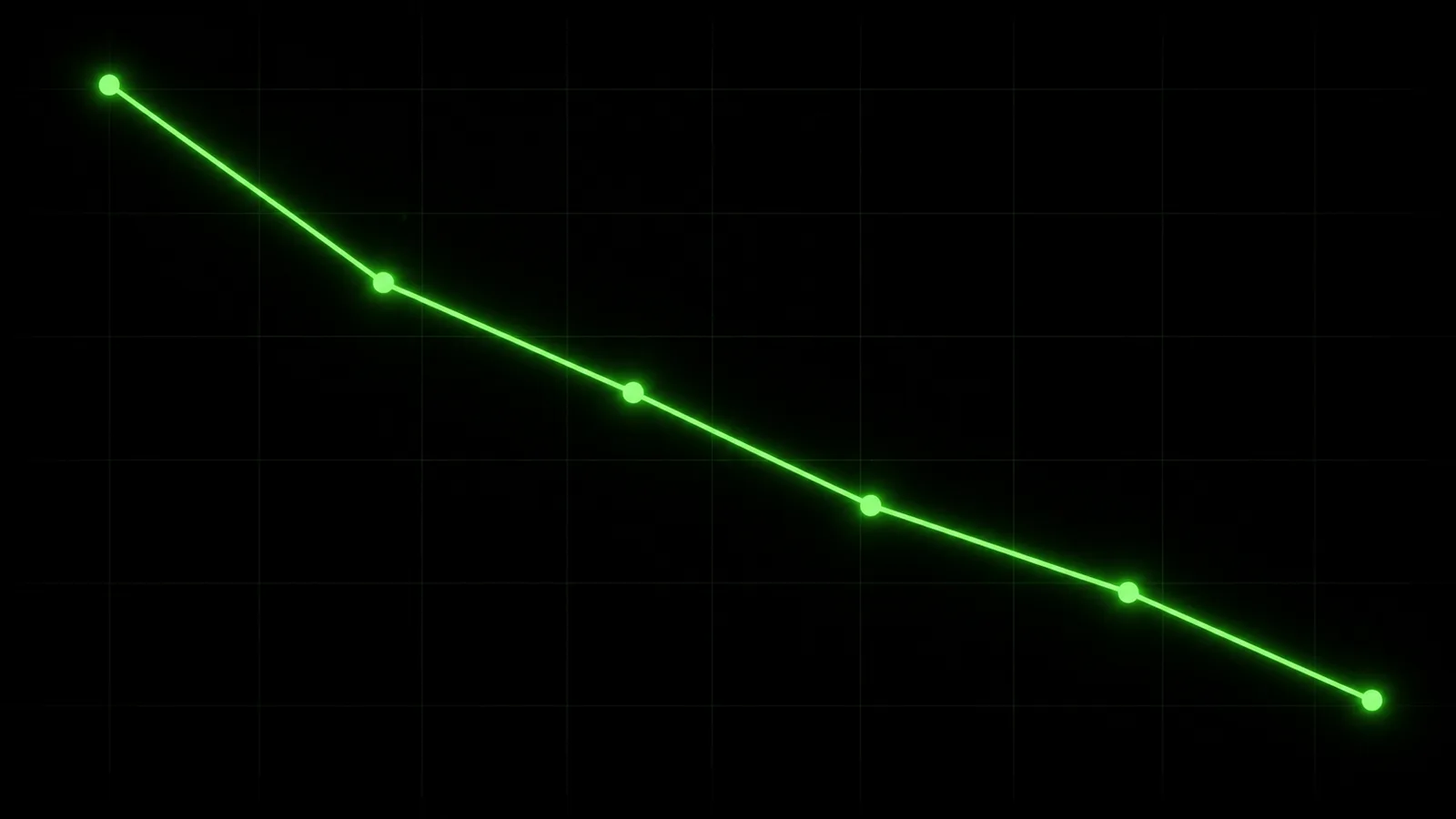
A single low score, on its own, means almost nothing actionable — it could reflect one bad night's sleep, a late dinner, travel, or a dozen other transient factors completely unrelated to training readiness. What actually matters is the trend: five consecutive days of declining HRV, rising resting heart rate, and worsening sleep scores represents something real happening in your body's recovery capacity, and that pattern deserves a genuine training adjustment. This is exactly the distinction that gets lost when someone treats every daily number as an independent verdict rather than one point on a longer curve.
When to Override the Score Entirely
There are specific situations where I tell clients to trust how they feel over the number, in both directions:
- Override toward caution when you have any signs of illness onset (elevated respiratory rate is often an earlier indicator than the recovery score itself catching up), significant unresolved soreness from a previous session, or you're dealing with a stressful life event the device has no way of measuring.
- Override toward training when the score is moderate-to-low but tied to a single identifiable, non-training cause you're confident about — a late flight, one poor night's sleep from a noisy hotel room — and you genuinely feel fine, energized, and ready. In this specific scenario, a light-to-moderate session as planned is usually reasonable.
The device is a tool that removes some guesswork; it was never meant to remove your own judgment entirely, and treating it as infallible in either direction is where I see people get the most frustrated with these platforms.
Illness and Overtraining: The Early Warning Signs Worth Knowing
One of the more genuinely useful applications of this data, beyond day-to-day training decisions, is early illness and overtraining detection. Elevated overnight respiratory rate is a documented early marker for illness onset and incomplete recovery, and it often shifts noticeably before HRV or resting heart rate catch up — meaning it can flag "something's off" a day or two before you'd otherwise notice it yourself. If you see respiratory rate trending up for a couple of days alongside declining recovery scores, that's a reasonable moment to genuinely back off training volume, even if you don't feel sick yet, rather than pushing through into a harder illness or a deeper overtraining hole.
A note on device accuracy: No wearable perfectly measures internal physiology — these are estimates built from accessible signals like wrist or finger-based HRV and temperature, not clinical-grade measurements. Use the data as a genuinely useful input alongside how you feel, not as an infallible medical readout, and consult a physician for any persistent symptoms rather than relying on wearable data alone.
Factors the Score Doesn't See — And How to Account for Them Yourself
Beyond the well-known inputs, there's a set of genuinely important readiness factors these devices simply don't measure, which is exactly why the score should never be the only input into a training decision:
- Localized muscle soreness. A wearable has no way of knowing your hamstrings are still trashed from Monday's deadlifts. A green recovery score doesn't mean it's automatically a good day to load that same movement pattern heavily again.
- Warm-up performance. This is one of the most underused readiness signals available, and it's completely free — how your first few warm-up sets feel (bar speed, joint stiffness, general coordination) is often a more specific, in-the-moment readout than any overnight score, precisely because it's measuring the exact system you're about to load.
- Mental and emotional stress. Work stress, poor life-event sleep disruption, and general mental fatigue affect training capacity significantly and aren't fully captured in HRV or sleep-stage data, even though they do influence those metrics indirectly over time.
- Hydration and nutrition status. Under-fueling or under-hydrating going into a session will affect performance and perceived effort independent of what your overnight recovery metrics showed.
The practical implication: treat the wearable score as your starting hypothesis for the day, then confirm or adjust it with these additional, zero-cost signals before finalizing how hard you actually train.
A Practical Morning Checklist
- Check the score, but note the trend, not just today's number. Is this a genuine multi-day pattern or an isolated reading?
- Do an honest subjective check-in. On a scale that matters to you, how do you actually feel, independent of what the app says?
- Identify any obvious single-cause explanation for a mismatch — travel, alcohol, a late night, a stressful day — that might explain a low score without reflecting genuine accumulated fatigue.
- Use your first warm-up sets as a live data point rather than deciding your session plan before you've moved at all.
- Choose your tier — push, maintain, or modify — based on all of the above together, not the score in isolation.
How This Fits Into a Real Training Program
Recovery-score data works best layered on top of an already well-structured program, not as a replacement for one. Our recovery and injury prevention guide covers the foundational pillars — sleep, nutrition, training volume management — that these devices are ultimately just giving you a real-time readout on. If your recovery scores are chronically poor regardless of training adjustments, the wearable is doing its job by flagging it, but the actual fix usually lives in those fundamentals, not in more sophisticated data.
This matters even more for clients over 40, where recovery capacity genuinely changes and reading these signals accurately becomes more valuable, not less. Our strength training for longevity over 40 guide covers how I adjust programming specifically for that population, and wearable recovery data is a useful tool within that framework rather than a separate conversation.
"The clients who get the most value out of these devices are the ones who use the score to ask a better question, not the ones who use it to avoid asking any questions at all. 'Why has my HRV been dropping for four days' is a useful thing to bring to a coaching conversation. Blindly following a single morning's color is not." — Kyle Belk, NASM-CPT
WHOOP vs. Oura: Which One Should You Actually Trust More?
This isn't really a "which is more accurate" question — both platforms use broadly similar underlying signals (HRV, resting heart rate, sleep, temperature/respiratory trends) and both are reasonably reliable at tracking your own trend over time, which is what actually matters for training decisions. The more useful distinction is philosophical: WHOOP's Recovery score is framed around a single day's readiness, while Oura's Readiness score explicitly factors in accumulated stress across recent days by design. If your two devices (or a device and how you feel) disagree on a given morning, that disagreement is more useful as a nudge to look at the trend and consider other factors than as a referendum on which company's algorithm is "right."
TURN YOUR RECOVERY DATA INTO AN ACTUAL TRAINING PLAN
Wearable data is only as useful as the program built around it. Get coaching that actually incorporates your recovery trends into real training decisions — NASM-certified, across South Carolina and online.
Apply for Coaching →Questions &
Answers
If your question isn't answered here, reach out directly — Kyle responds personally.
Use a push/maintain/modify framework: a high, trend-consistent score supports pushing intensity; a moderate score or a single off-day means training as planned without chasing a PR; a low score trending down over multiple days calls for reduced volume or intensity.
Usually yes, in modified form — light-to-moderate movement is generally better than total rest unless illness or injury is involved. A low score calls for reduced volume or intensity, not automatically skipping training entirely.
Recovery scores are built primarily from HRV, resting heart rate, sleep, and respiratory rate — they don't capture localized muscle soreness, mental stress, hydration, or nutrition status, all of which affect how you actually feel independent of those overnight metrics.
It combines heart rate variability (the most heavily weighted input), resting heart rate, sleep performance, and respiratory rate, collected passively overnight, into a 0-100 daily readiness measure.
Oura Readiness factors in sleep quality and balance, HRV balance, body temperature trend, and your previous day's activity level, giving a picture that leans more toward accumulated multi-day stress than a single night's data alone.
Generally no. A single low reading is common and often reflects a transient factor like travel, alcohol, or one poor night's sleep. A declining trend across multiple consecutive days is the more meaningful signal.
Heart rate variability (HRV) measures the variation in time between heartbeats and reflects autonomic nervous system balance. It's the most heavily weighted input in most recovery algorithms because it's a reliable non-invasive readiness signal, though it's also naturally noisy night to night.
To some extent, yes. A multi-day declining trend across HRV, resting heart rate, and sleep scores is a meaningful early indicator, and elevated overnight respiratory rate specifically can signal illness or overtraining onset before symptoms are noticeable.
Both use similar underlying signals and are generally reliable for tracking your own trend over time, which is what matters most for training decisions — this isn't really an accuracy competition between the two.
Treat the disagreement as useful information rather than picking one to ignore. Check for an obvious single-cause explanation, use your warm-up performance as an additional data point, and make your training decision based on the full picture, not the score alone.
Not directly — recovery scores don't measure localized muscle soreness. A green score doesn't mean it's automatically a good day to heavily load a muscle group that's still sore from a previous session.
Most coaches, and much of the available guidance, point to roughly three to five consecutive declining days as the threshold where the pattern likely reflects genuine accumulated fatigue rather than normal day-to-day noise.